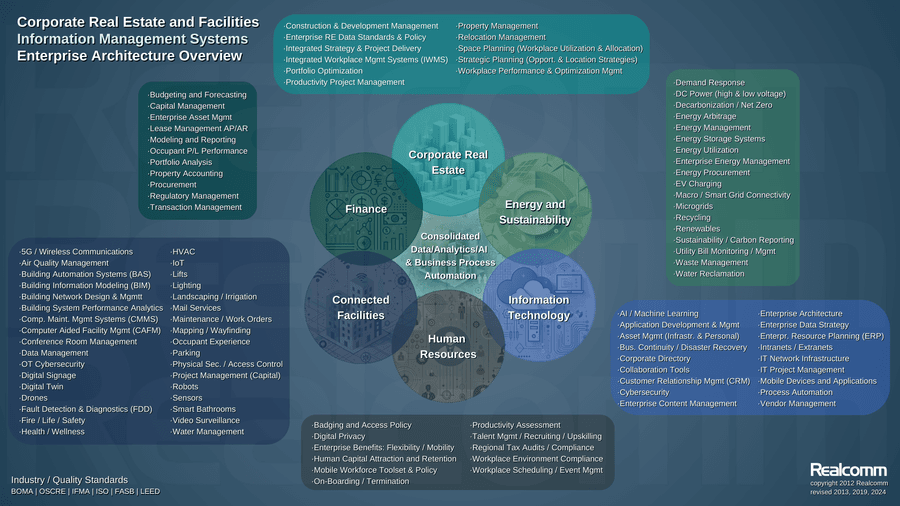
The Realcomm Conference Group, LLC has unveiled an updated version of its Corporate Real Estate and Facilities Information Management Systems Enterprise Architecture Overview infographic, shedding light on the ongoing challenges organizations face in implementing comprehensive corporate real estate (CRE) and facilities information management systems. Despite technological advancements, the industry's slow adoption of fully integrated enterprise architecture remains a significant hurdle.
Jim Young, Co-Founder and CEO of Realcomm, highlighted the gap between technological potential and actual implementation, noting the critical importance of integrated and automated workflows. The infographic, which aligns closely with its 2012 predecessor, emphasizes the continued relevance of consolidated data, analytics, and business process automation at the core of CRE and facilities management.
However, the reality is starkly different, with very few organizations achieving the seamless integration envisioned. Disparate systems, siloed data, and underutilized automation tools persist, hindering progress and leaving potential benefits like improved operational efficiencies, cost savings, and enhanced decision-making largely untapped.
The implications of this slow progress are far-reaching, affecting not just individual organizations but the entire CRE and facilities management industry. As other sectors rapidly advance technologically, the CRE industry risks falling further behind, potentially leading to inefficiencies and missed opportunities for innovation.
Realcomm advocates for proactive strategies in adopting integrated, data-centric methodologies, stressing that the roadmap established over a decade ago remains relevant. Organizations that align their systems and data workflows stand to gain significant competitive advantages.
The updated infographic will be a focal point at CoRE Tech 2024, offering a platform for professionals to explore technology, automation, and innovation's role in fostering more integrated approaches. As the industry grapples with digital transformation, Realcomm's findings serve as both a cautionary tale and a guide for future progress, highlighting the crucial role of comprehensive information management systems in shaping the industry's efficiency, sustainability, and competitiveness.