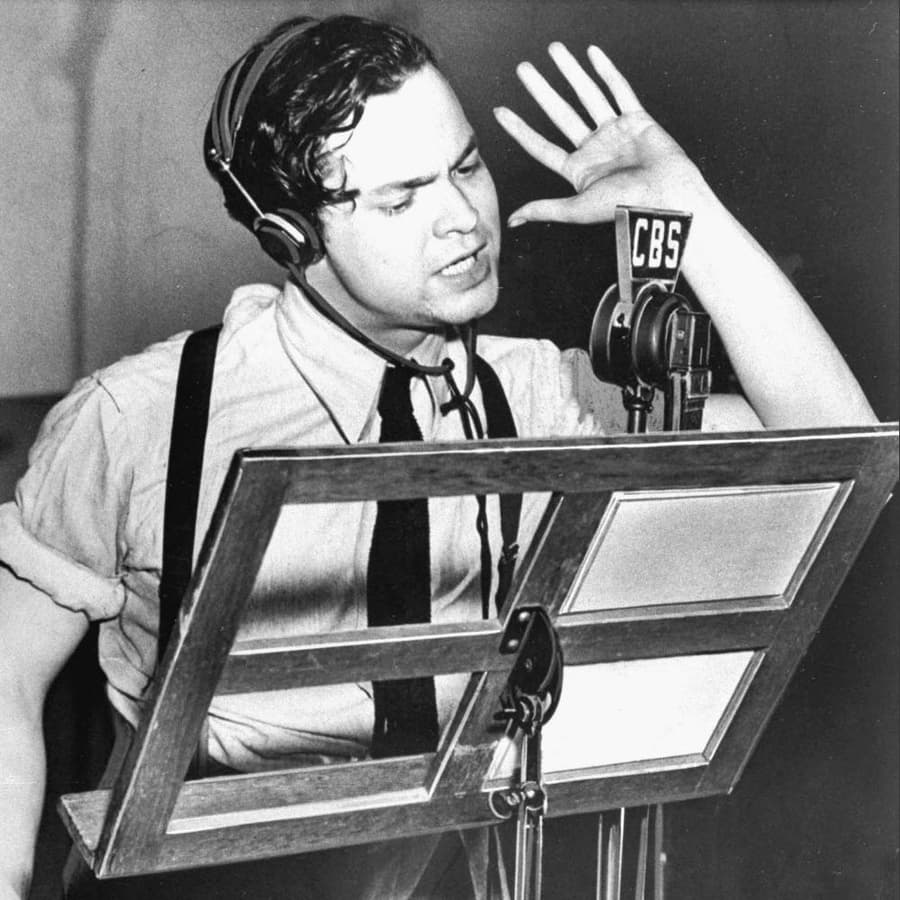
William Hazelgrove's latest book, 'Dead Air: The Night Orson Welles Terrified America', revisits the infamous 1938 'War of the Worlds' radio broadcast by Orson Welles, which caused nationwide panic by convincing many Americans of an alien invasion. The book, published by Rowman and Littlefield, examines the broadcast's lasting impact and its eerie relevance in today's era of rampant misinformation and media saturation.
The broadcast, which aired on October 30, 1938, utilized a realistic news bulletin format that, combined with the tense political climate and the burgeoning influence of radio, led to widespread panic. Hazelgrove's analysis delves into the technological and societal factors that amplified the hoax's reach, including the advent of car radios and the extensive network of CBS affiliates, marking one of the first instances of 'fake news' going viral.
'Dead Air' not only recounts the immediate reactions of the public, who fled their homes and armed themselves against a nonexistent threat, but also draws parallels to contemporary issues of media credibility and the viral spread of misinformation. Hazelgrove argues that the broadcast demonstrated how perception could become reality, a lesson that remains critically relevant in today's digital age.
The timing of the book's release is particularly poignant, as it coincides with heightened public interest in media literacy and the power of communication technologies to influence public opinion. By revisiting this historic event, Hazelgrove provides a lens through which to examine the evolving dynamics between media and society, and the potential consequences of unchecked information dissemination.
As discussions about media influence and the nature of truth in reporting dominate public discourse, 'Dead Air' serves as both a historical account and a cautionary tale. It underscores the enduring power of media to shape perceptions and actions, reminding readers of the responsibility that comes with media consumption and production in an increasingly interconnected world.