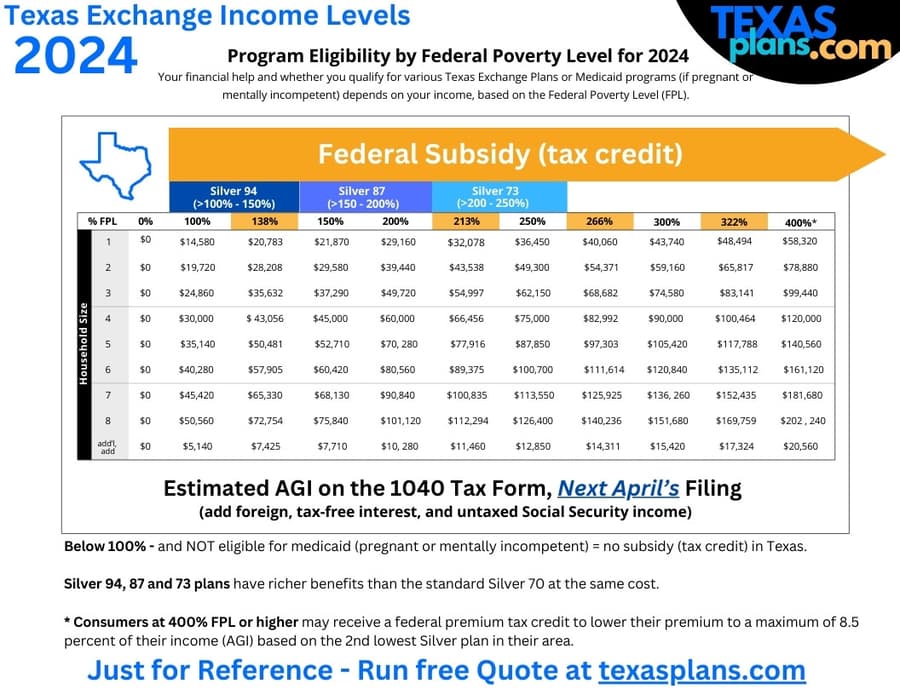
TexasPlans.com has recently introduced a comprehensive guide designed to simplify the Texas Health Exchange (Obamacare) subsidy income chart, a move that could significantly impact Texans' ability to afford health insurance. This guide arrives at a pivotal moment, as many residents face challenges in understanding and accessing financial assistance for healthcare.
The guide meticulously explains the subsidy income chart, a critical tool for determining the financial aid available to Texans. Misestimating income can lead to severe financial repercussions, including the necessity to repay subsidies during tax season. The guide emphasizes how subsidies can drastically lower monthly premiums, sometimes to zero, offering a lifeline to those balancing healthcare needs against tight budgets.
Highlighting common enrollment pitfalls, especially in income calculations, the guide aims to prevent costly errors that could affect coverage and financial health. It clarifies household definitions for subsidy purposes and the significance of accurately projecting the Adjusted Gross Income (AGI) for the current year, ensuring Texans receive the correct financial support.
For those with complex income scenarios, such as self-employed individuals, the guide provides clarity on reporting different income types for accurate subsidy calculations. It also advises on handling income variability and cautions against the implications of falling into the Medicaid eligibility range.
The guide underscores the importance of updating income estimates throughout the year to avoid unexpected subsidy repayments. Alongside the guide, TexasPlans.com offers tools to help Texans visualize how their income levels influence their health insurance options, making the information more accessible and actionable.
This initiative by TexasPlans.com marks a significant advancement in making health insurance more understandable and accessible for Texans. By equipping residents with clear, practical information, the guide empowers them to make informed health coverage decisions, potentially leading to improved health outcomes and financial security. As healthcare remains a critical national issue, such resources are invaluable in navigating the complexities of health insurance systems, benefiting not just individuals but the broader community.