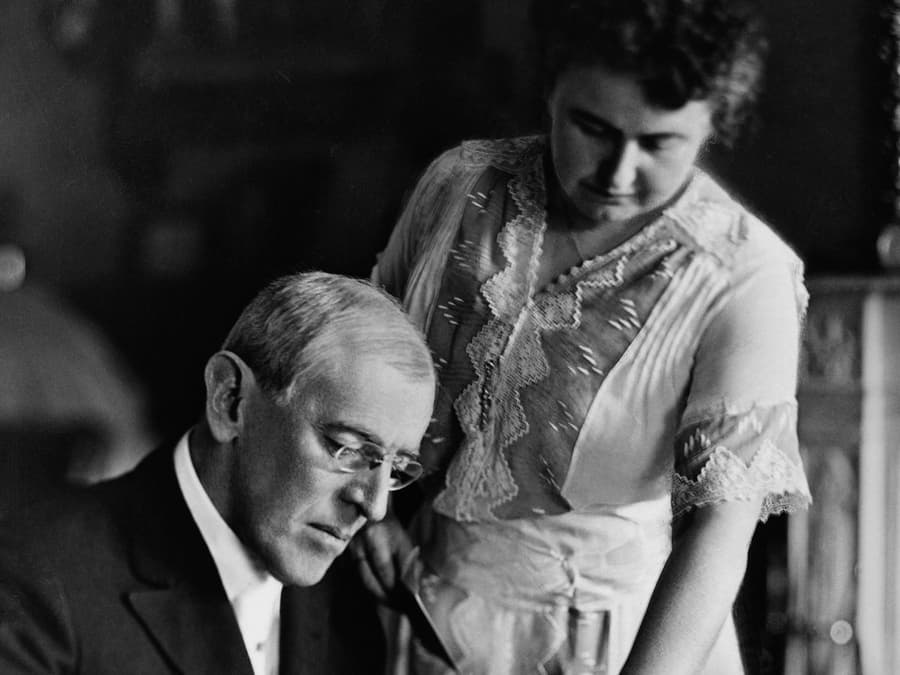
Author William Elliott Hazelgrove has sparked controversy by comparing the roles of First Lady Jill Biden and Edith Wilson, the wife of President Woodrow Wilson, suggesting both have assumed unofficial presidential duties due to their husbands' perceived incapacities. Hazelgrove, known for his book 'Madam President: The Secret Presidency of Edith Wilson', points to similarities in the public appearances and behaviors of President Joe Biden and historical accounts of President Woodrow Wilson post-stroke, raising questions about the transparency and dynamics of presidential power.
Hazelgrove's analysis cites President Biden's 'shuffling gait', reliance on scripted speeches, and limited press interactions as potential signs of diminished capacity, drawing parallels to Edith Wilson's management of presidential duties after her husband's stroke. He argues that the motivation behind both first ladies' actions is the preservation of their husbands' presidencies, influenced by the 'spoils system' that ties the fate of the administration to the president's tenure.
The comparison extends to the nature of the first ladies' involvement, with Hazelgrove suggesting that Jill Biden, like Edith Wilson, may be guiding the president and managing his public engagements to mitigate unscripted moments that could reveal cognitive challenges. This speculation, while unverified, touches on broader concerns about the role of unelected family members in governance and the implications for democratic processes.
Despite the provocative nature of Hazelgrove's claims, the White House maintains that President Biden is fully capable of fulfilling his duties. The discussion, however, contributes to ongoing debates about presidential fitness, the influence of first ladies, and the need for transparency in government operations. Hazelgrove's work, including insights from his book available on his website, adds a historical perspective to contemporary questions about power dynamics within the White House.
As public interest in presidential health and capacity persists, Hazelgrove's observations underscore the potential for significant, albeit unofficial, roles played by first ladies in presidential administrations. While the comparisons remain speculative, they highlight the importance of examining the intersection of personal influence and political power in the highest office of the United States.