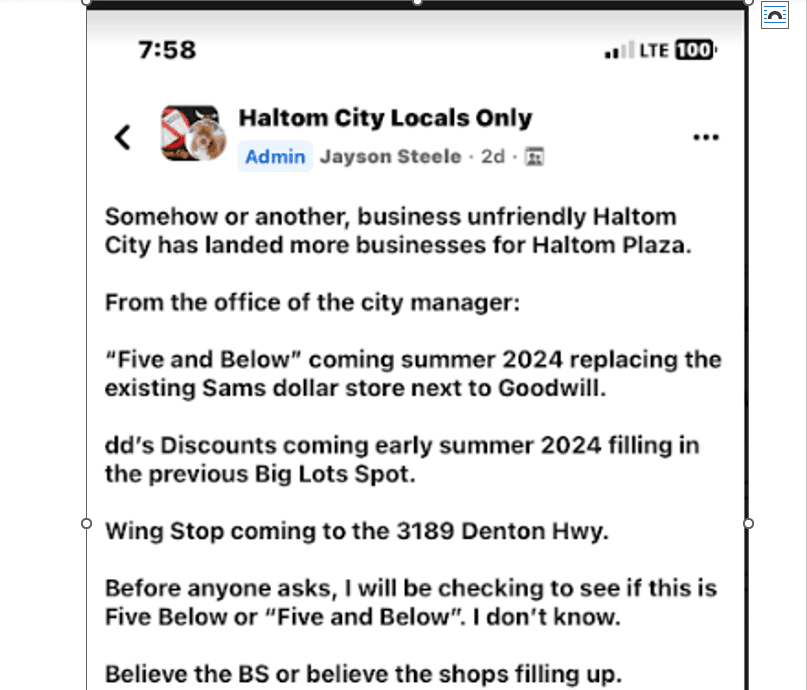
Haltom City, Texas, is confronting a troubling economic downturn marked by the closure of major retailers and a noticeable decrease in population. The southern and central districts of the city are particularly affected, with vacancy rates reaching approximately 30% in key commercial areas. Retail giants such as Sam's Dollar Store and Big Lots have ceased operations, leaving gaps that new businesses like Five and Below, WD's Discount, and Wingstop are expected to fill. However, the overall vacancy rate continues to climb, signaling deeper economic distress.
Joe Palmer, Communications Director for the Haltom United Business Alliance (HUBA), has voiced concerns over the city's current trajectory. Despite the introduction of new businesses, the departure of chain stores from the area underscores the challenges facing Haltom City. The situation is exacerbated by a recent report highlighting a population decline, contrasting sharply with the growth seen in other parts of Tarrant County and the Dallas-Fort Worth metroplex, which welcomes around 1,000 new residents daily.
HUBA is advocating for a comprehensive strategy to rejuvenate the struggling sectors of Haltom City. The organization has proposed code improvements to foster new business development, yet city officials have not yet outlined a definitive plan to address the issues plaguing the southern and central regions. Palmer has criticized the newly elected council members for their focus on northern Haltom City, neglecting the urgent needs of the more distressed areas. This oversight, according to HUBA, fails to tackle the visible signs of decay, such as abandoned storefronts, which deter both current residents and potential newcomers.
The economic and demographic challenges in Haltom City reflect broader trends affecting older, smaller cities across the United States, including rising crime rates and the loss of businesses in historic districts. HUBA is pushing for public hearings and the creation of targeted initiatives to reverse the decline. Drawing inspiration from successful urban renewal projects in similar cities, HUBA suggests that a strategic approach could offer a pathway to recovery. For more information on urban renewal strategies, visit https://www.google.com/search?q=urban+renewal+in+small+cities.
The ongoing situation in Haltom City serves as a critical case study for other municipalities facing similar challenges. Without immediate and effective intervention, the city risks further economic deterioration and population loss, underscoring the need for collaborative and innovative solutions to spur revitalization.