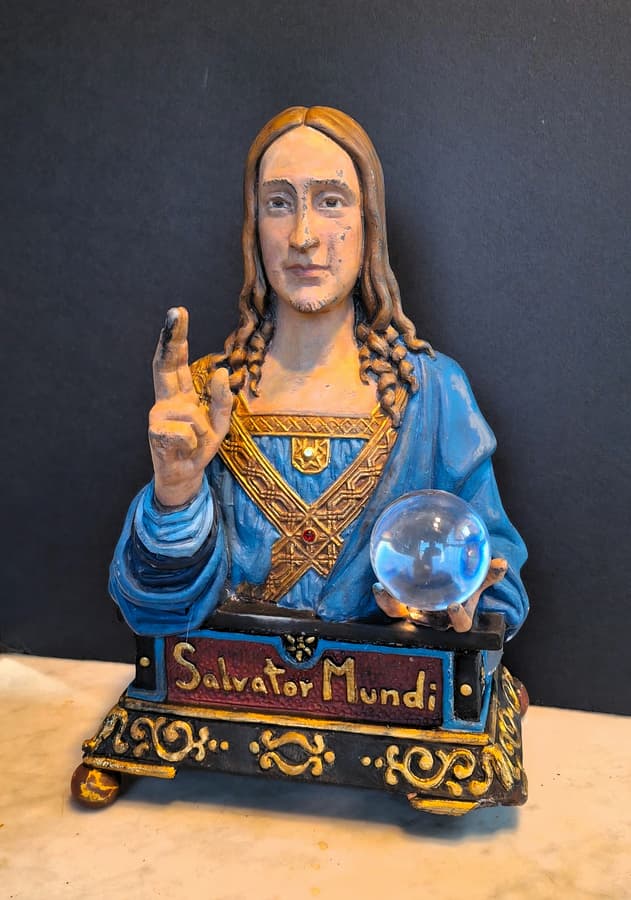
The art world is abuzz with the discovery of a mechanical bank at the Antique Trade Days Arts and Craft Fair in Ponchatoula, Louisiana, that closely resembles Leonardo Da Vinci's Salvator Mundi painting. Found by Beatrice Collins, an avid collector from Baton Rouge, the bank features a figure of Jesus with a movable arm that performs a blessing motion, reminiscent of the iconic artwork that sold for $450 million in 2017.
The mechanical bank, dating back to the late 19th or early 20th century, has sparked speculation about its origins and a possible connection to Da Vinci's work. Collins' sister, Alice, an art history enthusiast, recognized the potential significance of the find, prompting the siblings to seek expert opinion in New York City. The discovery has not only captivated collectors but also raised questions about the bank's history and value, drawing parallels to the Salvator Mundi's own journey from obscurity to record-breaking sale.
This find underscores the enduring fascination with Da Vinci's work and the potential for undiscovered treasures to emerge from unexpected places. For the business and technology sectors, particularly those involved in art authentication and valuation, this discovery highlights the importance of expertise and technology in uncovering the true value of historical artifacts. The story of the mechanical bank serves as a reminder of the blend of art, history, and commerce, and the impact such discoveries can have on the art market and cultural heritage.