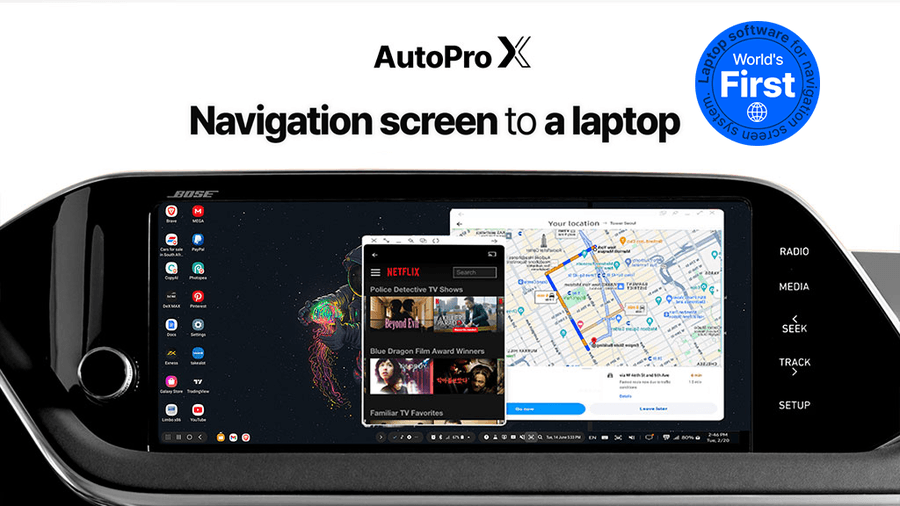
Mayton Motion is poised to redefine in-vehicle technology with its latest innovation, AutoPro X, a wireless adapter that transforms a car's navigation screen into a fully functional laptop. This groundbreaking device leverages Samsung's DeX software, originally designed for TV and PC monitor use, to bring a wide array of smartphone applications directly to the vehicle's infotainment system. By simply connecting an Android smartphone to the car's navigation system via the AutoPro X adapter, users can access GPS navigation, video streaming, internet browsing, email, social media, and even ChatGPT, among other applications.
The AutoPro X stands out for its ability to make Samsung's DeX software compatible with navigation screens, a first in the industry. This compatibility allows for a seamless integration of smartphone functionalities into the car's display, offering users the convenience of multitasking and productivity on the go. Furthermore, the device supports Bluetooth connectivity for game controllers, keyboards, and other peripherals, enhancing the user experience beyond traditional infotainment systems.
One of the key features of AutoPro X is its 'Screen Select Mode', which provides users with the flexibility to choose between a full-screen display or the original aspect ratio of their smartphone. This feature ensures a personalized and comfortable viewing experience, catering to individual preferences and needs.
AutoPro X is designed to be compatible with a wide range of vehicles that support Samsung Galaxy phones and Android Auto, including models from Honda, Chrysler, Audi, Mercedes, and Porsche. The product is set to launch via a Kickstarter campaign on March 21st, 2024, offering early adopters the opportunity to be among the first to experience this innovative technology. For more information, visit https://www.kickstarter.com.
The introduction of AutoPro X by Mayton Motion marks a significant milestone in the evolution of in-vehicle technology. By bridging the gap between smartphones and car infotainment systems, this device not only enhances the functionality and versatility of vehicle displays but also sets a new standard for what drivers and passengers can expect from their in-car experience. The implications of this technology extend beyond convenience, potentially influencing future developments in automotive design and the integration of digital technologies in vehicles.