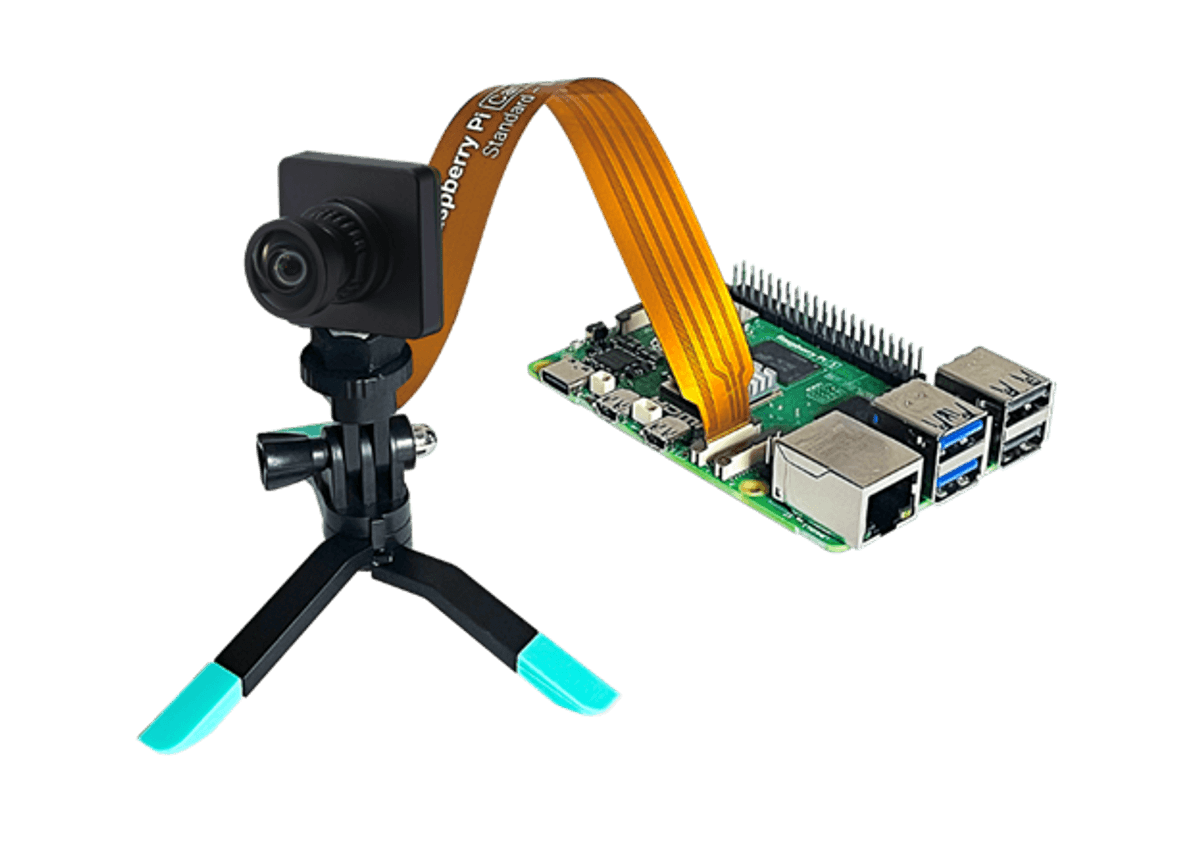
Prophesee has introduced the GenX320 Starter Kit for Raspberry Pi 5, marking the first availability of the company's event-based neuromorphic vision technology to the Raspberry Pi developer community. The kit connects directly to the Raspberry Pi 5 camera connector, enabling development of real-time applications for drones, robotics, industrial automation, surveillance, and other fields where traditional frame-based vision systems face limitations.
Event-based vision represents a fundamental shift from conventional approaches by detecting changes in brightness at each pixel rather than capturing entire images at once. This methodology allows sensors to respond in microseconds, operate with significantly less data and processing power, and achieve greater power efficiency compared to traditional sensors. The technology's advantages include faster response times, reduced data processing requirements, and lower power consumption, making it particularly valuable for applications requiring real-time processing and energy efficiency.
The GenX320 Starter Kit provides access to Prophesee's Metavision event-based vision platform through the company's OpenEB open-source core. Developers can utilize Python and C++ APIs to create solutions for applications where traditional frame-based vision struggles, including obstacle avoidance for drones, real-time SLAM, 3D scanning, defect detection, predictive maintenance, intrusion detection, and motion analytics. The kit's availability through GitHub provides developers with drivers, data recording tools, and visualization resources essential for rapid prototyping.
Built around the GenX320 sensor, the kit features a 320x320 resolution, greater than 140 dB dynamic range, event rate equivalent to approximately 10,000 frames per second, and sub-millisecond latency. The sensor consumes less than 50 mW in sensor-only operation and includes a MIPI CSI-2 interface for native integration with Raspberry Pi 5. This technical specification enables developers to work with high-performance vision capabilities while maintaining energy efficiency.
The starter kit's availability to the Raspberry Pi ecosystem, which has sold more than 60 million units and engages millions of developers worldwide, represents a significant expansion of event-based vision technology accessibility. This development enables cost-effective and efficient prototyping of advanced vision applications that were previously limited to specialized hardware platforms. The democratization of neuromorphic vision technology through the Raspberry Pi platform could accelerate innovation in computer vision applications across multiple industries, potentially leading to more efficient and responsive automated systems in manufacturing, transportation, and security sectors.