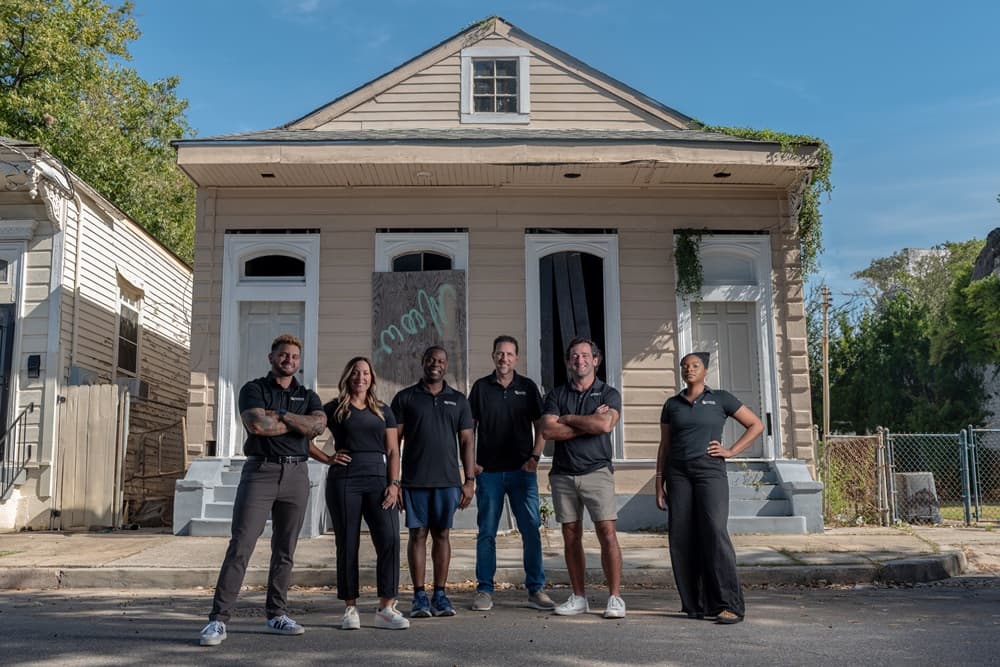
In Louisiana's real estate market, where many investors seek move-in ready properties, Stephen Keighery of Home Buyer Louisiana pursues a different path. He actively seeks distressed properties that others avoid, completing over 200 deals by seeing potential where others see only problems. This perspective represents more than renovation planning—it reflects a philosophy about how value is actually created in complex markets.
When traditional buyers encounter distressed properties, they typically see broken systems, outdated fixtures, and structural concerns as costs and risks. Keighery processes the same physical reality differently, focusing on architectural details like old fireplaces, crown molding, heart pine floors, and tall ceilings characteristic of historic New Orleans homes. "We see the vision of what it will be," Keighery explains. "We don't care what it looks like now." This economic insight recognizes that once a property is fully renovated, the margin has been captured by whoever did the work, making distressed properties the true opportunity for value creation.
Keighery's vision extends beyond physical structures to human situations. Where others see distressed properties, he sees families in transition dealing with circumstances beyond their control, including probate issues, inheritance complications, and life transitions. "We don't judge," Keighery emphasizes. "We enjoy helping them move on, getting them a cash offer so they can turn that asset into cash." This approach fundamentally changes acquisition negotiations, focusing on problem-solving rather than purely extracting value.
The investor's background at hipages Group in Australia, where he helped build systems connecting homeowners with contractors, informs his current approach. Real estate wholesaling operates on similar two-sided marketplace principles, and Home Buyer Louisiana systematically creates value by solving problems others can't address. The company has developed processes for navigating complex succession issues, clearing title problems from generations of informal transfers, and handling all-cash purchases for properties where traditional financing is impossible.
This problem-solving capacity generates returns more effectively than simply buying at the right price. "We take those houses that are like that, and we revitalize them," Keighery explains. "It fixes the whole area up." Individual property transformation contributes to neighborhood improvement, creating a virtuous cycle that compounds over time. The company's expansion from New Orleans to Baton Rouge, Lafayette, and the Mississippi Gulf Coast demonstrates how this perspective transfers across markets, requiring local insight to recognize opportunities and systematic capabilities to capture them.
Louisiana's complex legal environment—with succession issues, title problems, storm damage, and hyper-local pricing dynamics—creates barriers that national investors struggle to overcome. "I quite like this market for myself because it's hard for people to enter," Keighery acknowledges. "The national companies and bigger players, it's really hard for them to come in." This complexity discourages others while creating opportunity for investors with local expertise.
While Keighery has built sophisticated data-driven processes for evaluating properties without physical visits, his true advantage is perceptual. The ability to identify what makes a deteriorating house special, what the neighborhood values, and what renovations will generate the best returns comes from experience, local knowledge, and a fundamentally different way of seeing. This alignment of interests—where doing well requires doing good—represents sustainable competitive advantage. Home Buyer Louisiana succeeds by creating value others can't, solving problems others won't, and seeing potential others miss, demonstrating that perspective might be the most valuable asset in real estate investing.