Chalet, a data-first platform for short-term rentals, released its year-end analysis of Airbnb calculator search patterns in 2025, revealing that 32.5% of all searches focused on just three Sun Belt states: Florida, California, and Texas. This concentration reflects the region's continued dominance in the short-term rental market, with these states also accounting for 69% of Chalet-assisted acquisitions in 2025.
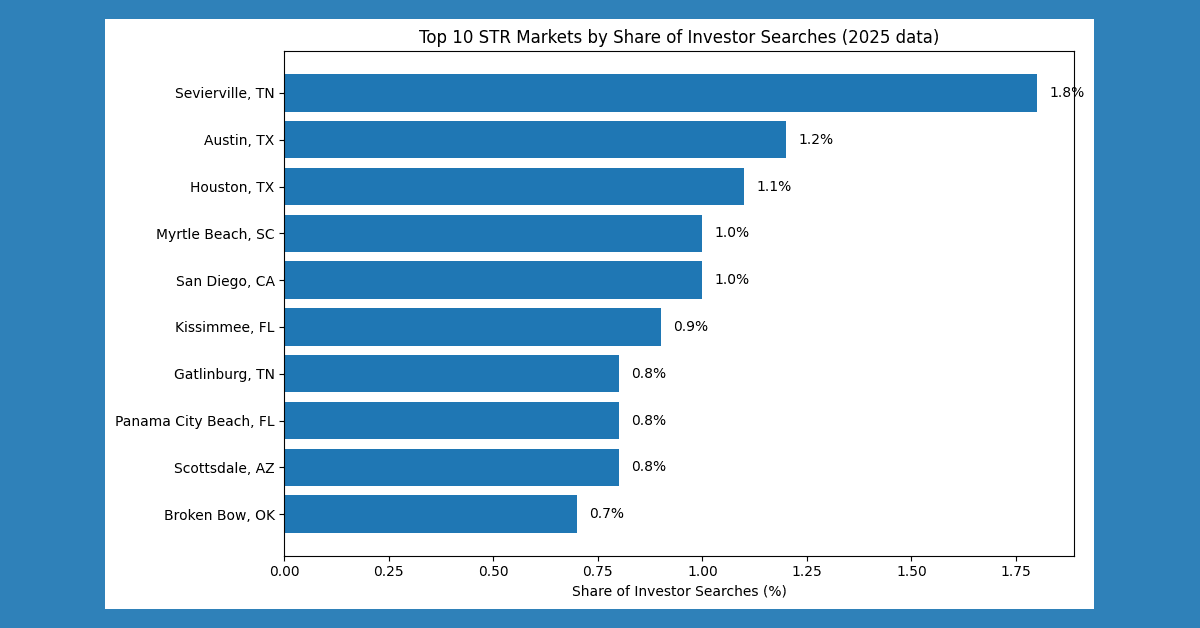
The data indicates a significant shift toward secondary "drive-to" vacation markets, which saw higher engagement rates per listing than traditional urban hotspots. Regional destinations like Sevierville, Tennessee, which ranked as the most-searched city with 1.8% of total searches, outperformed major cities including Austin, Texas (1.2%) and San Diego, California (1.0%). Nearly 70% of the 30 most-searched STR markets were regional or destination-driven rather than large urban metros.
Chalet users closed 205% more STR property deals in 2025 compared to the previous year, with big city markets accounting for only 27.3% of all closed deals. Austin, Texas emerged as the single most active market for closed deals, representing just over 9% of all transactions. Other leading markets included San Diego, California; Fort Lauderdale, Florida; Dallas, Texas; Kissimmee, Florida; and Myrtle Beach, South Carolina, each contributing approximately 6% of closed deals.
The analysis reveals that while search behavior was widely distributed across dozens of markets, actual purchases remained more concentrated at the execution stage. This pattern highlights the importance of detailed ROI modeling and market-level insights to convert broad research into executed transactions. The full 2025 analysis and interactive market dashboard provide tools for identifying emerging opportunities.
Another significant finding shows that strict short-term rental regulations significantly suppress market interest. Interest in regulation-heavy metros like New York City and Los Angeles was negligible, accounting for under 0.2% of all searches. This underscores how restrictive regulatory frameworks limit STR viability, causing investors to favor markets with more stable and host-friendly policies.
The data suggests that while execution remains selective, research continues to be broad, with no single market dominating search volume. This fragmentation indicates investors are exploring diverse opportunities beyond traditional hotspots. The gap between search patterns and transaction locations emphasizes the need for comprehensive market analysis to identify execution-ready opportunities before capital deployment shifts.