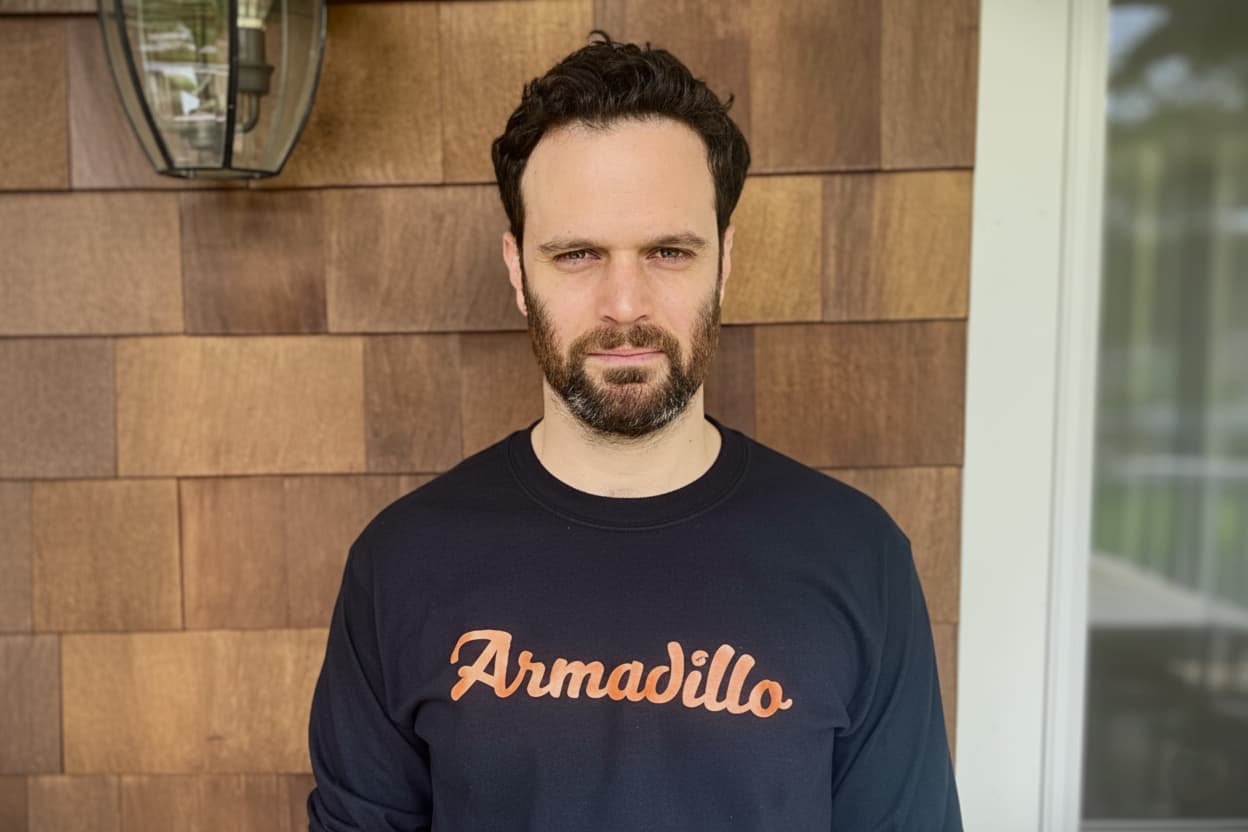
Matan Slagter, CEO and Co-Founder at Armadillo, has identified what he calls the home warranty industry's "structural problem" that has led to widespread consumer distrust. With a background in traditional insurance at AIG, Slagter recognized that home warranty companies were primarily responsible for their own poor reputations, evident in countless negative online reviews from homeowners. While homeowners' insurance maintains over 90% attachment rates due to mortgage requirements, home warranty remains optional and distrusted, a difference Slagter attributes to decades of companies prioritizing technician networks and cost structures over customer experience.
Slagter's actuarial background shapes Armadillo's uncommon approach in the startup space: disciplined growth with customer experience thoughtfully embedded into the pricing model. He applies mathematical rigor to ensure products are priced to support both long-term profitability and high-quality service, deliberately building in the capacity to deliver genuine care rather than focusing solely on cost efficiency. By grounding Armadillo's growth in actuarial principles, Slagter emphasizes sustainability—setting prices that reflect real risk and service needs while creating a business designed to scale responsibly while maintaining strong customer experience.
Transparency serves as a core strategy for Armadillo, not merely a feature. When the company took inspiration from Domino's Pizza's tracking system, it wasn't simply about replicating a clever interface. "What became clear to me is that coverage alone doesn't determine how homeowners feel—communication does," Slagter explained. "Two homeowners can receive the same thousand dollars for a refrigerator replacement, yet have completely different experiences. It comes down to how clearly you communicate, how long people wait, and whether they understand the reasoning behind the decision." The challenge is significant in an industry that sits between technicians and homeowners in a highly fragmented landscape, requiring integration with contractor systems and parts suppliers.
Perhaps Armadillo's most radical departure from industry norms is letting homeowners choose between the company's vetted network or their own trusted technicians—an option no other major player offers upfront. The traditional model made sense from a cost perspective: companies negotiated lower rates with their technician networks to keep expenses down. However, this approach was destroying customer experience, with complaints frequently centering on long wait times and unprofessional service. While some newer entrants tried the opposite approach, offering only reimbursement for customer-selected contractors, Armadillo went further by giving customers genuine choice upfront. Data reveals that a significant portion of claims utilize the self-service option, and the company built its entire technology stack around this dual model, with systems that adapt based on customer choice.
With projections suggesting the home warranty market could reach $13.6 billion by 2030—roughly triple its current size—the opportunity is substantial. For home warranty specifically, evolution likely extends beyond repair and replacement. Preventive maintenance represents an obvious expansion, helping homeowners maintain systems before they break rather than only fixing failures. Slagter has observed a recurring pattern across industries: organizations grow accustomed to existing ways of working and gradually lose sight of the reasons behind them, rarely pausing to ask whether those practices still make sense. In an industry burdened by its own reputation, simply asking that question—and being willing to change in response—may be the most meaningful form of transformation. The home warranty sector needs more than incremental improvements; it requires companies willing to acknowledge past failures, reimagine core assumptions, and build with both profitability and genuine value in mind.