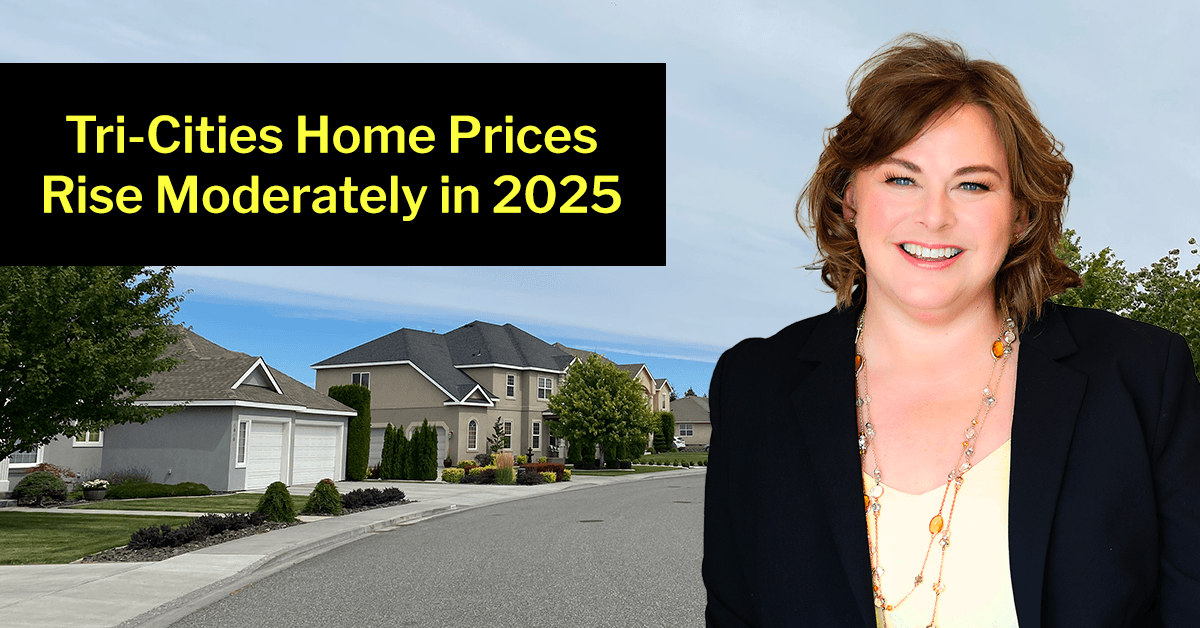
Home prices in the Tri-Cities area recorded moderate gains in 2025, marking the second year of price increases following a market adjustment in 2023, according to data tracked by the Cari McGee Real Estate Team. Despite a relatively flat market compared to historical averages, local real estate data shows that all key price measures climbed year-over-year, reflecting continued stability and buyer interest in the Tri-Cities housing market.
The median sales price for homes sold in December 2025 was $424,900, a 1.2% increase compared with December 2024. Across all 3,590 homes sold in 2025, the full-year median sales price was $433,000, up 1.9% from 2024. The average sales price for the Tri-Cities in 2025 reached $479,044, 3.6% higher than 2024 and a new annual record for the area. The previous high average sales price was $469,760 in 2022.
"These gains might seem modest when viewed in isolation, but they indicate healthy market conditions and sustained demand for homes across the immediate Tri-Cities area," said Cari McGee, local Realtor and market expert. Taken together, the data show that 2025 was a year of steady housing price appreciation for the Tri-Cities market. The area includes Kennewick, Pasco, Richland, West Richland, Benton City, and Burbank.
For the 2025 year, home prices rose in each of the area's biggest cities, with the exception of Kennewick. As of December 2025, the median price of a home in Kennewick was $408,000, down 4% from one year ago. Pasco ended the year with a median sales price of $425,405, which is 1.6% higher than one year ago. As of December 2025, the median sale price of a home in Richland was $437,445, up 5% from one year ago. West Richland finished 2025 with a median sales price of $437,000, up 1.6% from one year ago.
For business and technology leaders monitoring regional economic indicators, the Tri-Cities housing data provides valuable insights into local market resilience. The sustained price increases, particularly the record average sales price, suggest underlying economic strength and continued desirability of the region for residents and businesses alike. The mixed performance across cities, with Kennewick's decline contrasting with gains elsewhere, highlights the importance of localized market analysis for investment and expansion decisions. The stability shown in these figures may influence corporate relocation considerations, talent attraction strategies, and regional economic forecasting for industries tied to the local economy.