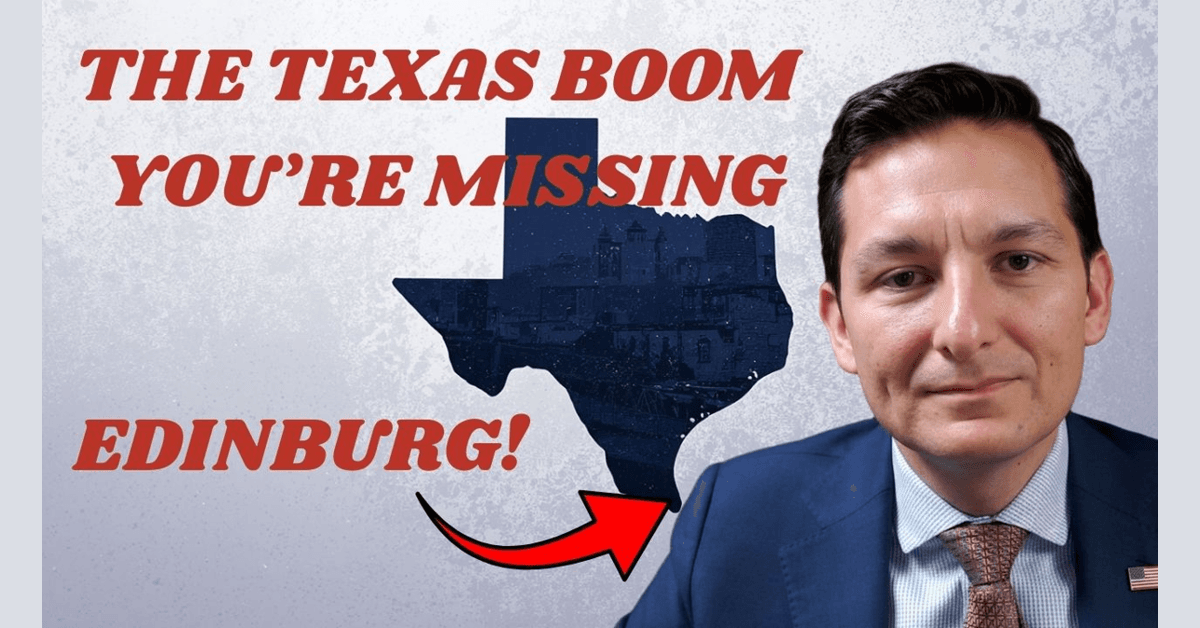
The Rio Grande Valley is transforming into a resilient economic corridor through strategic regional collaboration and diversification, with Edinburg, Texas emerging as a key growth hub according to Mayor Omar Ochoa. In a recent episode of The Building Texas Show, Ochoa detailed how the region has moved beyond agricultural dependence to develop a robust economy spanning trade, manufacturing, retail, aerospace, and cross-border commerce. This diversification has created insulation against economic shocks that typically impact other regions more severely.
Regional cooperation represents a fundamental shift in the Valley's approach to development. Where neighboring cities once competed for resources, they now collaborate on transportation planning, workforce development, and supporting shared institutions like UT Rio Grande Valley. This unified strategy has unlocked greater access to funding and infrastructure investment across multiple counties, creating a more cohesive economic ecosystem. The cooperative model demonstrates how mid-sized cities can leverage collective resources to compete on national and global scales.
Edinburg's specific advantages position it for significant growth as a logistics and industrial center. Unlike many developed urban areas, the city maintains substantial available land along major transportation corridors, making it attractive to site selectors, industrial developers, and expanding employers. The city's proactive economic development strategy emphasizes responsible growth that balances immediate opportunities with long-term sustainability considerations. This approach creates predictable conditions for business investment while protecting community interests.
Quality of life investments complement economic development efforts in Edinburg. Known as the "City of Festivals," the community hosts year-round cultural, civic, and entertainment events alongside professional and G-League sports. These amenities, combined with lower living costs and strong community pride, attract professionals and families from across Texas and beyond. The city's digital planning tools and GIS development maps provide transparency about growth patterns, while active social media engagement keeps stakeholders informed about development opportunities.
The Rio Grande Valley serves as a critical logistics and trade corridor for the United States, with its strategic location enhancing both domestic and international commerce. Mayor Ochoa's personal journey—leaving for education and career experience before returning to contribute to his hometown—mirrors a broader trend of talent circulation that benefits regional development. This pattern of skilled professionals returning with expertise creates a sustainable talent pipeline that supports continued economic expansion.
Edinburg's development model offers valuable insights for business leaders evaluating expansion opportunities in emerging markets. The combination of available infrastructure, regional cooperation, economic diversification, and quality-of-life investments creates a resilient foundation for long-term business success. As mid-sized cities increasingly compete for investment and talent, Edinburg's approach demonstrates how strategic planning and community engagement can position regions for sustainable growth in evolving economic landscapes. The full conversation about Edinburg's development strategy is available on YouTube through The Building Texas Show.