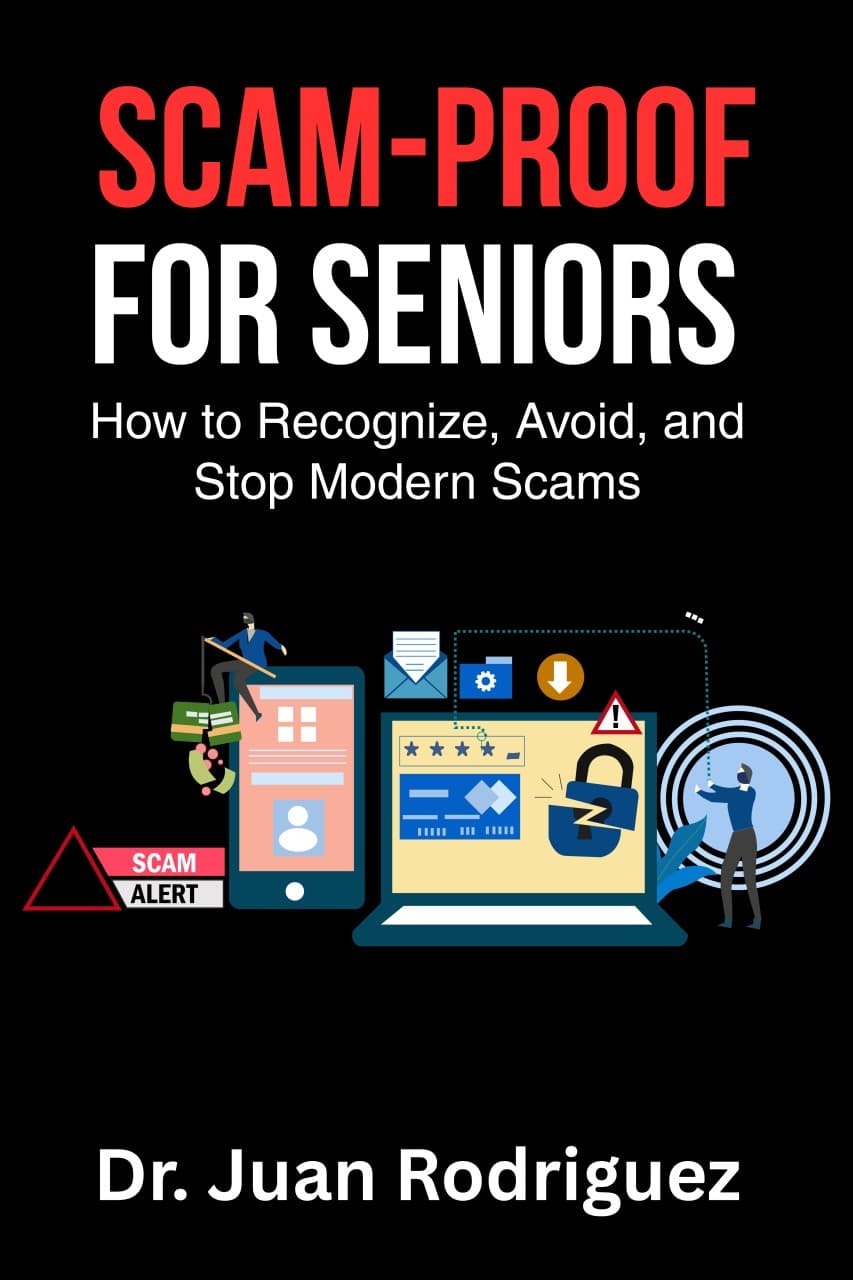
The increasing prevalence of online scams, fraud, and impersonation schemes across email, text messages, phone calls, and social media platforms has prompted the release of a new practical guide designed to help readers protect themselves. 'Scam Proof for Seniors,' a new book by Dr. Juan Rodriguez, provides readers with practical, easy-to-understand tools to protect themselves and their loved ones from modern scams.
The book explains how modern scams operate and why they succeed across various communication channels including email, phone, text, and social platforms. It offers practical, non-technical steps to identify scams, verify legitimacy, and respond if compromised. The guide addresses a wide range of threats that have become increasingly common, including phishing emails, fake tech support calls, romance scams, and impostor government messages.
Written specifically for seniors and families, the book focuses on education, empowerment, and real-world scam scenarios. This approach recognizes that while technology continues to advance, the human element remains the most vulnerable point in digital security. The book's practical strategies aim to protect personal data, finances, and digital identity through clear, actionable guidance rather than technical jargon.
For business and technology leaders, this publication highlights the growing market for cybersecurity education that targets non-technical users. As digital threats become more sophisticated and widespread, there is increasing demand for resources that translate complex security concepts into accessible information. The book's focus on seniors represents a significant demographic that is often targeted by scammers but may have less familiarity with digital security practices.
The author, Dr. Juan Rodriguez, brings relevant expertise to this subject as an educator, cybersecurity professional, and host of the Technology Tap podcast. With years of experience teaching cybersecurity, digital safety, and technology literacy, Dr. Rodriguez focuses on helping everyday users understand complex digital risks in clear, practical terms.
For industry professionals, this development underscores the importance of user education in overall cybersecurity strategies. While businesses invest heavily in technical security measures, individual users remain vulnerable to social engineering attacks that bypass technological defenses. Resources like this book complement corporate security programs by empowering users to recognize and avoid threats before they reach organizational systems.
The broader implication for the technology industry is the recognition that security education must evolve alongside technological advancement. As artificial intelligence and automation make some scams more convincing, user awareness becomes increasingly critical. This publication represents a growing segment of the cybersecurity market focused on human factors rather than purely technical solutions.
Readers interested in the full announcement can access additional information through the Reportable distribution platform. The availability of such resources reflects the expanding ecosystem of digital safety education that supports both individual protection and broader cybersecurity initiatives.