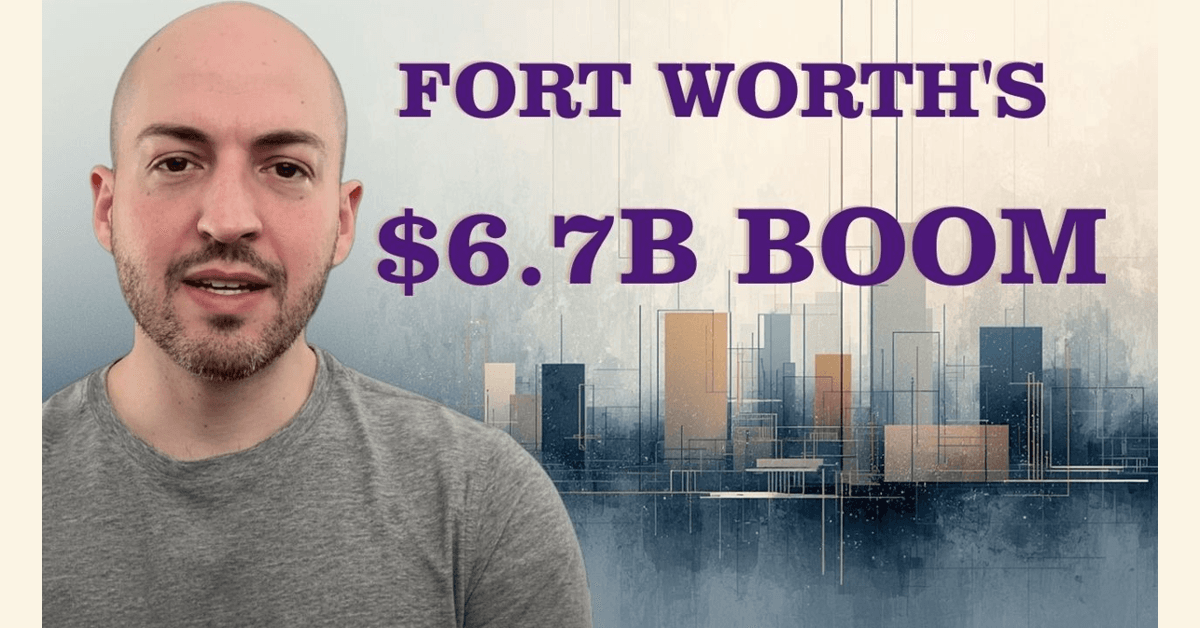
Dr. Brandon Chicotsky, associate professor at Texas Christian University (TCU), private equity advisor, and founder of God Bless Retirement, recently appeared on The Building Texas Show to analyze Fort Worth's economic trajectory. The city recorded $6.7 billion in new capital investment during fiscal year 2025, marking its strongest performance in over a decade. Chicotsky attributed this growth to strategic developments in aerospace, technology, logistics, and advanced manufacturing sectors.
Companies are actively recruiting from TCU's specialized programs, including the TCU Sales Center where graduates frequently earn over $100,000 in their first year. This academic-industry connection represents a key component of Fort Worth's economic ecosystem. Chicotsky described the city's approach as blending heritage with innovation, creating what he calls a "uniquely Texan" model of success.
The professor emphasized that Fort Worth's achievements stem from what he termed "sensible government" focused on practical outcomes rather than political performance. He contrasted this with what he described as "stuck cities" like Chicago or San Francisco, noting that Fort Worth maintains decorum while effectively operationalizing government functions. Examples include mixed-use urban infill projects in Westside Village and collaborations with prominent developers like John Goff and Ross Perot Jr.
Academic expansions further demonstrate the city's investable climate, including UTA West and Texas A&M's new downtown law school. These institutions contribute to the skilled workforce that attracts corporate investment. Fort Worth's incentive structure represents another critical element of its growth strategy, utilizing Chapter 312 tax abatements and Chapter 380 "pay-as-you-go" agreements to attract projects that expand the tax base without addressing budget shortfalls.
"We use incentives to grow, not to fill gaps," Chicotsky explained during the interview. With approximately 66,000 undeveloped acres available, the city is positioned for what he calls "quality growth" that outpaces infrastructure costs. This planned expansion contrasts with reactive approaches seen in some other metropolitan areas.
Chicotsky connected economic strategy with cultural identity, highlighting Fort Worth's unique blend of history and modernity. From its origins as a frontier fort to today's "Western chic" culture, the city maintains its distinctive character while embracing contemporary development. The thriving stockyards district and Paramount-backed production campus led by Taylor Sheridan contribute to this cultural-economic synthesis.
Tourism represents a significant economic driver, with 11.5 million visitors in 2024 generating over $3.5 billion in economic impact. Chicotsky emphasized that storytelling and brand identity are not peripheral concerns but integral to economic development. The full interview offers additional insights into Fort Worth's growth model and Chicotsky's vision for what he describes as a "generative economy."
For business and technology leaders, Fort Worth's approach offers a case study in balancing economic expansion with cultural preservation, utilizing structured incentives without creating fiscal dependencies, and leveraging academic institutions as economic catalysts. The city's model demonstrates how functional governance can facilitate sustainable growth while maintaining distinctive regional identity.