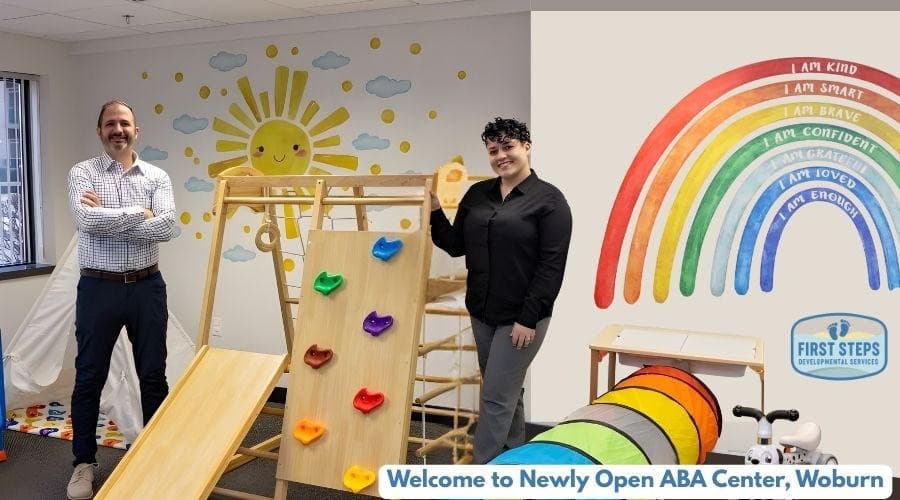
First Steps Developmental Services has opened a new early intervention center in Woburn that provides immediate access to Applied Behavior Analysis services for children with autism spectrum disorder and Down syndrome. The facility serves children ages 0–6 and operates without waiting lists, directly addressing what the organization identifies as a critical gap in regional access to early intervention services.
The center delivers evidence-based ABA therapy through individualized, developmentally appropriate programs designed to support communication, social skills, and early learning during foundational developmental stages. First Steps works closely with families and caregivers to create supportive environments that extend beyond clinical sessions. Jarrod Scalzo, Founder and CEO of First Steps Developmental Services, stated that the organization was created to help children make meaningful progress early in life while empowering parents with the knowledge and support needed to advocate for their children.
Scalzo brings more than 20 years of experience in special education and early intervention to the center's leadership. As a Board Certified Behavior Analyst, he oversees a team of licensed BCBAs and highly trained support professionals who deliver services at the Woburn facility. The center is currently enrolling families from Middlesex, Essex, and Suffolk counties.
A significant development supporting the center's operations is Massachusetts insurance providers' new requirement to cover ABA therapy for individuals diagnosed with Down syndrome beginning January 1, 2026. This regulatory change expands access to services across the state and complements First Steps' acceptance of most major insurance plans for ABA services. The combination of insurance coverage expansion and immediate service availability creates a notable shift in regional early intervention accessibility.
The business implications of this development extend beyond immediate patient care. For business leaders monitoring healthcare and technology intersections, the center represents a model for addressing service gaps through strategic timing with regulatory changes. Technology professionals may note the evidence-based methodology's structured approach to developmental support, which parallels data-driven methodologies in other sectors. The immediate enrollment capability demonstrates operational efficiency that could influence service delivery models in related healthcare segments.
For families in the region, the center's opening means reduced delays in accessing critical early intervention services during developmental windows when intervention is most impactful. The business community may observe how healthcare providers are adapting to regulatory changes while addressing documented service shortages. More information about eligibility, insurance coverage, and enrollment is available at https://www.firststepsds.com.