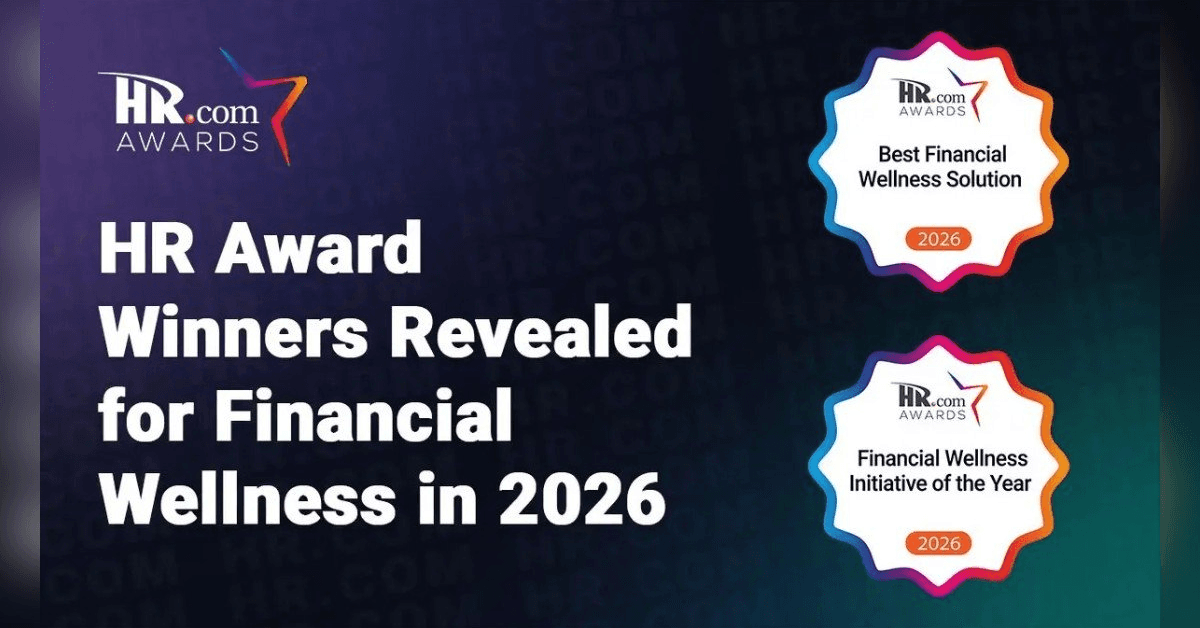
The winners of the Financial Wellness Awards for 2026 were announced during HR.com's State of Financial Wellness Virtual Event on March 10. The awards honor outstanding achievements in advancing financial literacy in the workplace and strengthening financial wellness benefits and initiatives. This year’s award recipients demonstrate innovation, excellence, and a steadfast commitment to prioritizing employee wellness and reducing stress to support work-life balance.
LearnLux received the award for Best Financial Wellness Solution. The company is transforming workplace financial well-being with personalized fiduciary guidance, digital planning tools, and education that empowers employees at every life stage. By connecting education to actionable advice, this solution helps reduce financial stress, boost productivity, and improve retention, making financial wellness a core workforce strategy rather than just a perk.
The Financial Wellness Initiative of the Year award went to Wellness by Fiducient, developed by Fiducient Advisors. This holistic program empowers employees with personalized financial insights, AI-driven coaching, and global resources. By turning financial awareness into action, it delivers measurable impact, boosting confidence, engagement, and outcomes across the workforce. A complete list of award winners is available at https://www.hr.com/awards.
HR.com CEO Debbie McGrath emphasized the strategic importance of these initiatives. "Financial wellness is more than a benefit. It’s a cornerstone of employee well-being, engagement, and productivity," McGrath said. "These award winners are helping organizations reduce stress, empower employees to make smarter financial decisions, and create workplaces where people can thrive both professionally and personally."
For business and technology leaders, these awards signal a significant shift in how organizations approach employee benefits. The recognition of solutions like LearnLux and Wellness by Fiducient underscores a growing trend where financial wellness is integrated as a strategic component of workforce management rather than an ancillary perk. The use of personalized, technology-driven tools—including AI coaching and digital planning platforms—demonstrates how data and automation can scale personalized financial guidance across large organizations.
The implications for industry are substantial. As financial stress remains a leading cause of employee distraction and turnover, these award-winning programs offer a blueprint for improving retention and productivity. By providing employees with the tools and knowledge to manage their finances effectively, companies can foster a more focused, confident, and stable workforce. This evolution in benefits strategy reflects a broader understanding that employee financial health is directly linked to organizational performance and resilience in a competitive economic landscape.