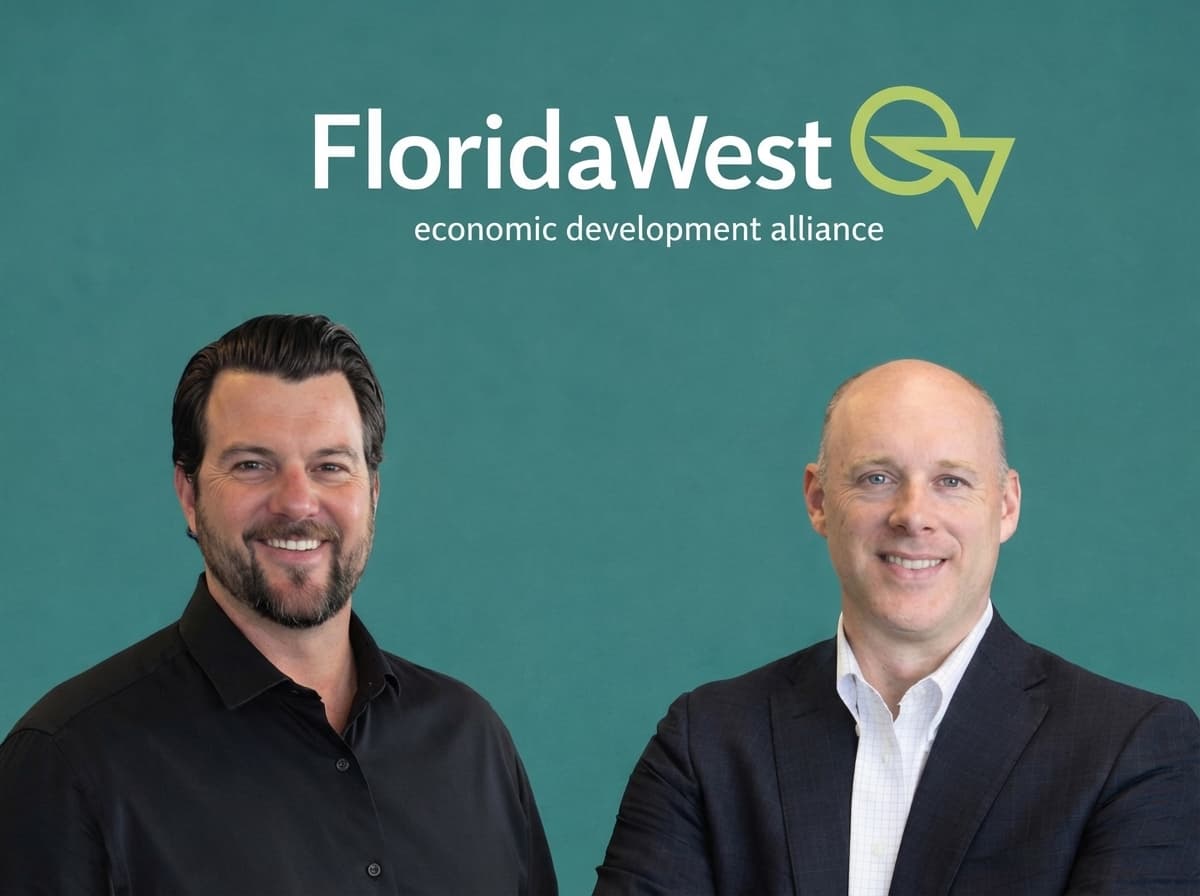
Florida West Economic Development Alliance CEO Chris Platé has implemented a focused economic development strategy for Escambia County that prioritizes four key industry clusters: aerospace and aviation, medical and life sciences, marine and maritime, and cyber and defense. With nearly 30 years of experience creating over 7,000 manufacturing jobs and $5 billion in capital investment across the Carolinas, Platé arrived in Northwest Florida with a mandate to strengthen the industrial base and position the region for long-term growth.
In a conversation on the Beyond the Build podcast, Platé detailed the practical realities of modern site selection, noting that companies now cast wide nets across multiple states and demand accurate data immediately. "If you don't have what they need, then don't even apply because it just makes them upset, particularly a consultant," Platé explained. Economic developers must maintain broad knowledge to engage specialized experts at critical moments, whether consulting with Florida Power & Light for energy concerns or workforce development leaders for labor availability.
Escambia County's site inventory includes several strategically positioned properties. The 9-acre Pensacola Technology Campus downtown offers turnkey development with 12-15 megawatts of power capacity suitable for multi-story buildings and smaller data centers. Midtown Industrial Park, a former brownfield with clean sections, sits nearly shovel-ready pending infrastructure optimization. Central Commerce Park represents the most significant opportunity with 240 acres located just 15 minutes north of I-10, currently undergoing road layout and site planning to maximize density while limiting infrastructure costs.
Recent successes demonstrate Pensacola's selective approach to recruitment. Field International, an MRO aerospace supplier serving Airbus, Boeing, and ST Engineering, relocated its global headquarters from the United Kingdom to Pensacola specifically because the community aligned with the company's family-focused culture. This selectivity stems from Pensacola's competitive position, allowing the region to prioritize companies that enhance rather than disrupt community character while delivering high-wage jobs.
Infrastructure development remains critical to Pensacola's strategy, with heavy infrastructure for Central Commerce Park identified as the top priority. The location between I-10 and I-65 with available acreage represents Pensacola's strongest competitive advantage for traditional manufacturing within targeted industry clusters. Energy capacity planning with Florida Power & Light and the northern county cooperative remains essential even for smaller projects like $200 million data centers.
The maritime sector shows particular promise with Project Maeve, a recently announced maritime manufacturing initiative at the Port of Pensacola potentially bringing 2,000 jobs. "You bring in the mama pig and all the little piglets come with it," Platé explained, referencing how anchor projects attract supplier networks. Maritime's reliance on skilled welding and metalworking creates workforce training opportunities where Northwest Florida already has capacity, complementing American Magic's presence and the port's growing capabilities.
For business leaders and developers, Pensacola's strategic focus on four industry clusters, emphasis on site readiness over speculative development, and selective recruitment approach signal a maturing market with clear competitive advantages. Additional opportunities include a potential life science project for Tech Park that could connect the former Florida Power building to the Institute for Human and Machine Cognition, along with ongoing aerospace projects and local energy company expansion.