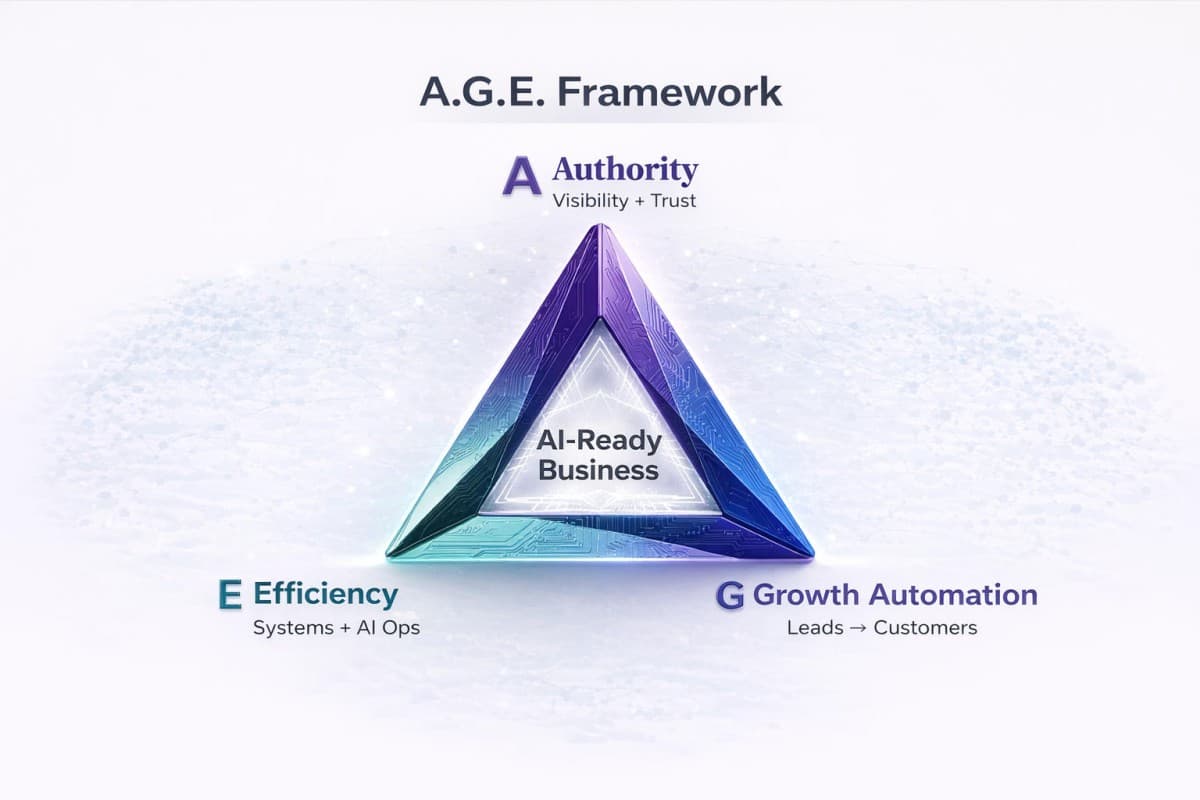
The A.G.E. Framework, a structured approach to AI implementation developed by consultant Sean Hyde, is being applied to address a critical challenge in the restaurant industry through a new tool called Plates That Pay. This AI-driven menu pricing system is designed specifically for independent restaurant operators who typically lack access to sophisticated pricing analytics available to larger chains.
At the core of Hyde's methodology are three distinct pillars: Authority, which focuses on establishing credibility in AI-driven search environments; Growth Automation, which addresses customer acquisition through automated pipelines; and Efficiency, which targets workflow optimization by replacing repetitive tasks with intelligent automation. More information about this structured approach is available at https://seanhyde.com/age-framework.
Plates That Pay represents a practical application of this framework to solve a specific operational pain point. Restaurant menu pricing is one of the most consequential yet least systematic decisions independent operators make, with most setting prices based on instinct, tradition, or rough competitor analysis. The result is often menus that either leave money on the table or quietly erode margins as food costs shift.
The tool works by allowing operators to input actual food costs and competitive market data, then processes this information to output optimized pricing recommendations for each menu item. The system is designed not to automate creativity or change a restaurant's character, but to ensure pricing reflects the real economics of running the operation. For restaurants operating on thin margins without dedicated financial analysts, this kind of data-driven pricing support has historically been unavailable or unaffordable.
The outcomes are focused and measurable. Operators benefit from reduced guesswork when setting or adjusting prices, moving beyond gut instinct to structured recommendations based on cost inputs. The tool protects margins by flagging menu items priced below sustainable thresholds relative to actual costs—a common problem as ingredient prices fluctuate. Equally important, it supports automated pricing decisions, allowing the system to absorb new data and update recommendations without requiring operators to restart analysis from scratch.
Hyde has commented on the thinking behind this work, stating, "The businesses that win with AI are the ones that stop treating it as a trend and start treating it as infrastructure. Plates That Pay is a direct example of that. We took a real operational pain point that affects thousands of independent restaurants and built a system around it that delivers a clear output."
The launch comes at a critical time for independent restaurant operators facing increasing pressure from rising food costs, labor expenses, and competition from larger chains with access to sophisticated pricing analytics. The gap between what large restaurant groups can afford and what independent operators have access to has been a persistent disadvantage. Hyde's work represents an effort to close part of that gap by making intelligent pricing decisions available at a scale and cost that works for single-location or small-group operators.
This application reflects Hyde's broader philosophy that AI should solve real, specific business problems before anything else. The restaurant industry is filled with operators skilled at food and hospitality but not financial analysis—and they shouldn't have to be. The right AI tool can handle the analytical layer so owners can focus on aspects requiring their expertise and judgment.
For business leaders across industries, the A.G.E. Framework provides a diagnostic for identifying where a business is losing time, revenue, or competitive positioning, along with a clear path for how AI can address these gaps. Whether applied to professional services firms, trades businesses, or restaurant operations, the framework maintains consistent structure while delivering industry-specific solutions.