

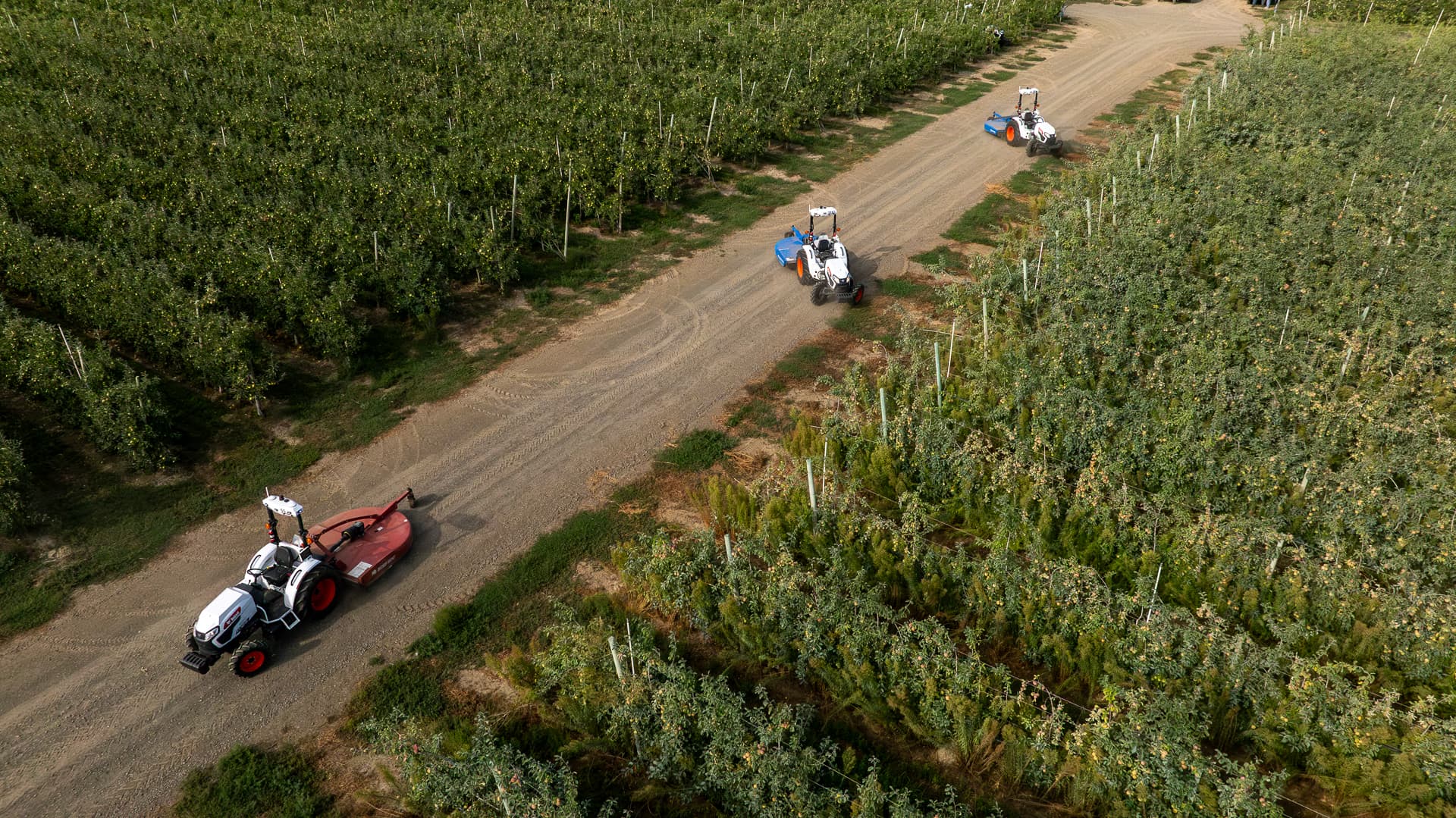
Agtonomy, a physical AI company specializing in factory-fit automation for off-road equipment, has announced significant upgrades to its autonomy stack. The enhancements include expanded passive data collection capabilities and the introduction of fully autonomous multi-point turning on Agtonomy-enabled units. These developments are set to improve operational efficiency and expand the range of tasks that autonomous equipment can perform.
According to the company, each Agtonomy-enabled unit in operation processes more than 2 terabytes of data per hour. This continuous stream of field intelligence feeds into Agtonomy’s commercial autonomy platform, which uses the data to accelerate system performance and refine autonomous operations. The increased data collection is a cornerstone of the company’s strategy to enhance the capabilities of its platform, enabling faster adaptations and more precise maneuvers in real-world conditions.
The introduction of autonomous multi-point turning is a notable advancement for the industry. This feature allows Agtonomy-equipped machinery to execute complex reverse maneuvers without any human intervention. Designed for challenging operational environments, the multi-point turning capability improves maneuverability in tight headland areas, enabling equipment to complete tasks on acreage that was previously inaccessible to autonomous tractors due to space constraints. This innovation is expected to benefit agricultural and turf management operations by increasing the usable land area for autonomous farming.
Agtonomy’s platform is embedded into industrial machinery through partnerships with leading original equipment manufacturers (OEMs). The company focuses on delivering intelligent automation for agriculture, turf, and other sectors, with an emphasis on boosting efficiency, safety, and sustainability. By expanding its data capabilities and autonomous maneuvers, Agtonomy is addressing key challenges faced by operators, such as labor shortages and the need for precision in complex environments.
The implications of these advancements are significant for the agricultural technology sector. Enhanced data collection at scale allows for more sophisticated analytics and predictive modeling, which can lead to better decision-making for farmers and fleet managers. The autonomous multi-point turning feature could reduce the need for manual intervention in tight spaces, lowering operational costs and increasing productivity. Moreover, the ability to operate in previously inaccessible areas may open up new opportunities for autonomous equipment in niche applications.
Industry observers note that the integration of such advanced automation into off-road equipment is a step forward in the broader adoption of AI in agriculture. As the technology matures, it could lead to more sustainable farming practices through optimized resource use and reduced environmental impact. Agtonomy’s focus on partnering with established OEMs ensures that its solutions are factory-fit, which may accelerate the adoption of autonomous features in mainstream equipment.
For business leaders and technology enthusiasts, these developments highlight the rapid progress in physical AI and its practical applications. The ability to collect and process terabytes of data in real time, coupled with autonomous maneuvers, underscores the potential for AI to transform traditional industries. As Agtonomy continues to innovate, its platform could become a benchmark for future automation solutions in agriculture and beyond.
