

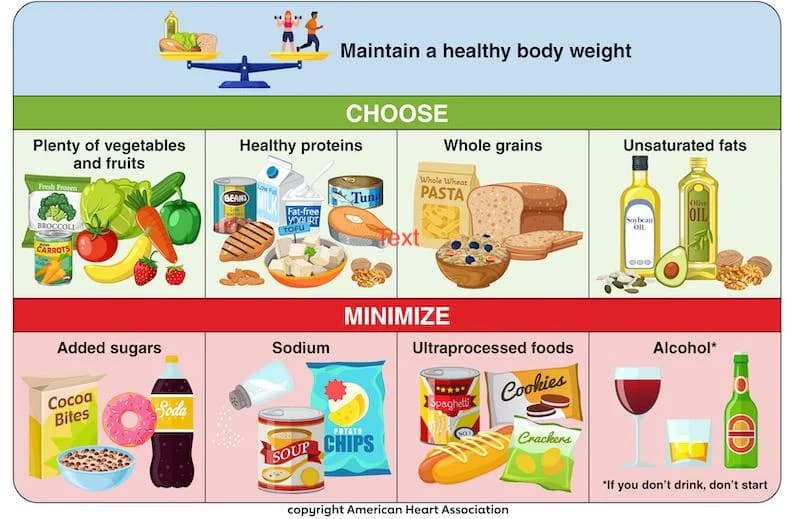
Poor diet quality remains a leading contributor to cardiovascular disease in the United States, with more than half of adults and about 60% of children consuming unhealthy eating patterns, according to the American Heart Association. In response, the organization has released updated dietary guidance that focuses on an overall healthy eating pattern rather than counting individual nutrients, aiming to make heart-healthy choices easier, more practical, and sustainable throughout life.
The updated guidance outlines nine key steps for a heart-healthy diet. The first step is maintaining a healthy balance between food and activity, emphasizing portion control and regular physical activity to achieve and maintain a healthy body weight. The second step encourages eating more vegetables and fruits, including canned and frozen options, which can be nutritious and convenient. The third step recommends choosing whole grains more often, such as whole-wheat bread, brown rice, oatmeal, and whole-grain pasta, as they provide more nutritional value than refined grains.
The fourth step prioritizes healthy protein sources, shifting toward plant-based options like beans, lentils, peas, nuts, and seeds, while also encouraging fish and seafood. For those who eat red meat, the guidance suggests selecting lean cuts, avoiding processed varieties, and keeping portions moderate. The fifth step advises replacing saturated fats with unsaturated fats found in nuts, seeds, avocados, and nontropical plant oils to support cardiovascular health.
The sixth step recommends choosing minimally processed foods that are close to their natural state, which typically contain fewer added ingredients and can help reduce reliance on ultraprocessed products. The seventh step urges limiting added sugars, commonly found in beverages, snacks, desserts, and packaged foods. The eighth step focuses on reducing sodium intake by reading nutrition labels, choosing lower-sodium options, cooking more meals at home, and using herbs, spices, and lemon for flavor instead of salt. The ninth step advises being mindful about alcohol consumption, noting that if you do not drink, don't start, and if you do, moderation is key.
The American Heart Association emphasizes the importance of starting healthy habits early, as dietary patterns established in childhood can influence long-term cardiovascular health. The organization recommends that children begin following a heart-healthy eating pattern at age one, and that families play a critical role in creating a healthy home environment to reduce reliance on highly processed foods.
One of the most important messages from the updated guidance is that progress matters more than perfection. Rather than focusing on strict rules or individual nutrients, the association encourages people to focus on their overall eating pattern and make gradual improvements over time. For additional heart-healthy eating resources and practical guidance, visit www.heart.org/healthydiet.
