

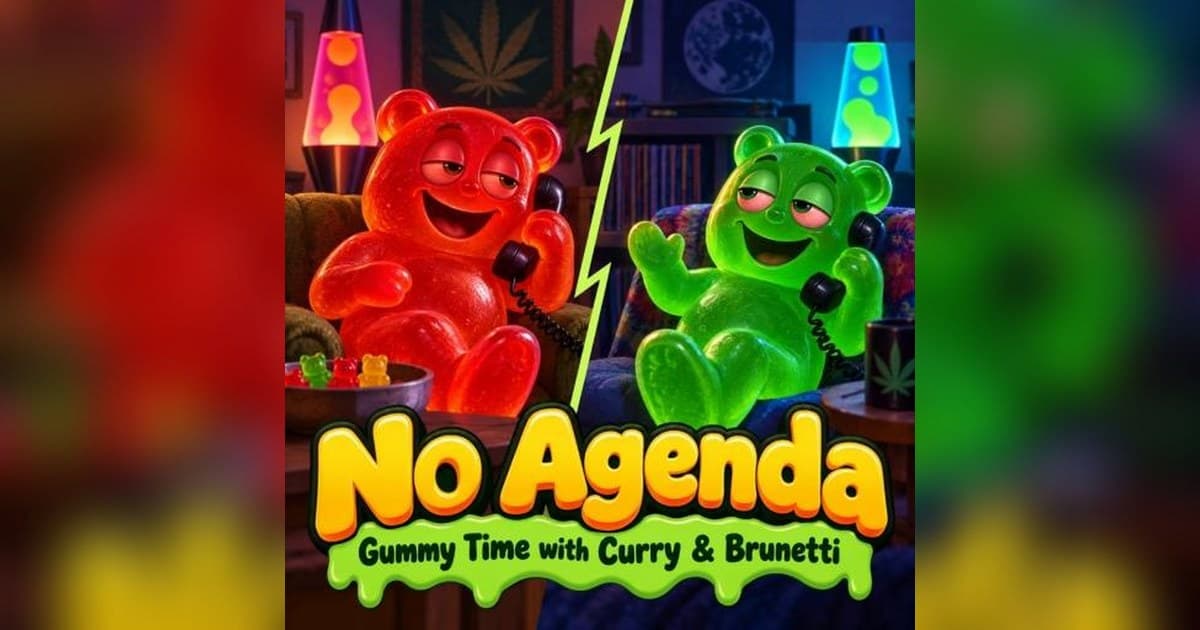
In a rare public appearance, Oscar-nominated producer Dana Brunetti joined host Adam Curry on episode 1903 of the No Agenda Show, titled "Non-Practicing," published September 13, 2026. The two-and-a-half-hour Curry & Friends installment, available at noagendashow.net, marked Brunetti's first podcast since leaving Los Angeles in 2019. The conversation spanned Hollywood dealmaking, media deconstruction, and technology, with Brunetti providing insider accounts that underscore how streaming disrupted traditional entertainment and how AI hype is shaping public discourse.
Brunetti, the executive behind The Social Network, House of Cards, Captain Phillips, 21, and the Fifty Shades franchise, recounted the pivotal Saturday-night call from director David Fincher that steered Kevin Spacey and House of Cards to Netflix. At the time, Netflix was an untested original-content player. Brunetti described how Reed Hastings' team bought the show in the room for $100 million across two seasons—a move that validated streaming as a home for premium content. Yet Brunetti downplayed his own role: "So everybody gives me credit for starting streaming and all that. It would have happened no matter what." His assessment suggests that while individual deals matter, the shift to streaming was an inevitable structural change driven by technology and consumer behavior, a lesson for leaders evaluating today's AI investments.
The episode's AI segment dissected what Brunetti and Curry characterized as a coordinated "kill all humans" psyop, citing Anthropic's Dario Amodei, Sam Altman, Bernie Sanders, and Rep. Greg Casar. They also discussed Treasury Secretary Scott Bessent's G7 remarks, Anthropic's Moonshot AI accusations, and the Sanders-Hawley bill proposing 20-year prison sentences for building artificial superintelligence. For business and technology leaders, this highlights a growing tension: AI companies warn of existential risks while policymakers propose severe penalties, potentially stifling innovation. The segment raises questions about whether such rhetoric is genuine concern or competitive positioning, and how regulations could impact AI development and deployment.
On the 25th anniversary of 9/11, Brunetti shared a firsthand account: he was two blocks from Building 7 that morning, filmed the North Tower's hole from his rooftop before the second plane hit, and evacuated over the bridge with his girlfriend, who was opening Issey Miyake's flagship store for Fashion Week. Curry revisited Bob Graham's Senate testimony and Megyn Kelly's reporting on the redacted 28 pages, while Brunetti connected the Adrian Lamo thread in his shelved documentary Hackers Wanted to Chelsea Manning's arrest. This deconstruction of 9/11 narratives matters because it challenges official accounts and underscores the importance of transparency—a principle that resonates in business and technology, where trust and accountability are paramount.
Additional topics included the Lindsay Clancy mistrial, the Black holdout juror, and NBC 10 Boston's rapid opposition-research doxxing; the AfD's 43.8% earthquake in Saxony-Anhalt; and Russia's new targeting of Ukrainian rail and fuel depots. For leaders, these stories illustrate the volatility of media narratives and geopolitical risks that can disrupt markets and supply chains.
Brunetti's appearance on No Agenda offers a case study in how media, technology, and business intersect. His skepticism toward AI fearmongering and his measured view of streaming's rise suggest that leaders should focus on structural trends over hype. The episode is available wherever podcasts are heard.
