

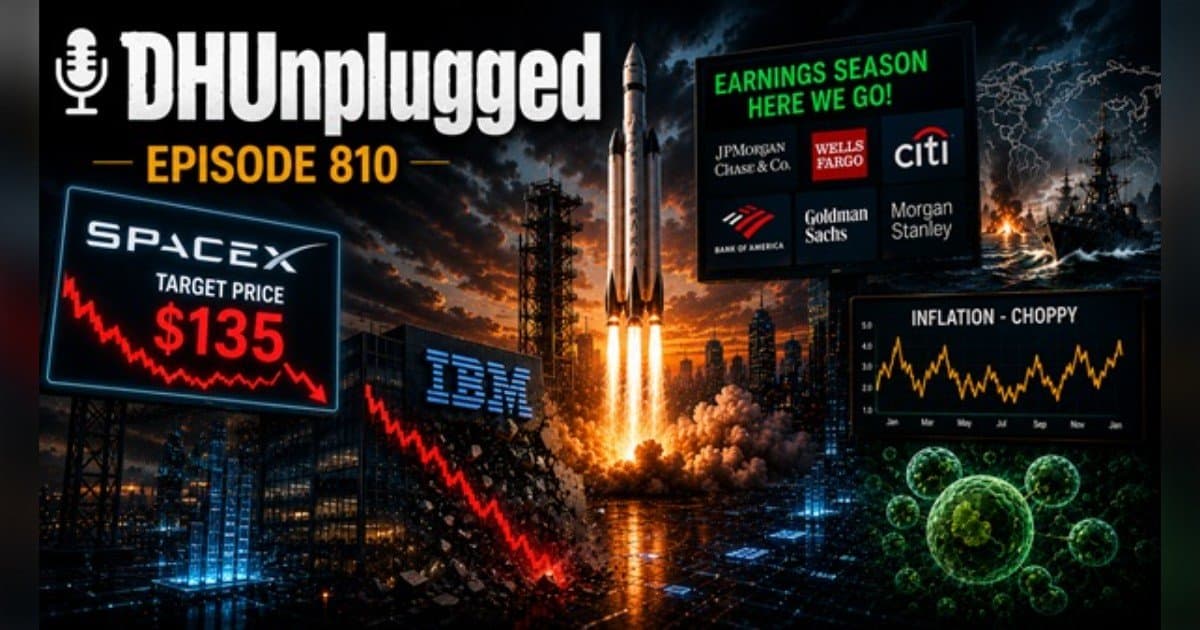
IBM cratered approximately 25% in a single trading session after the company issued a pre-announcement that missed revenue expectations by $700 million and revealed adjusted earnings per share of $2.93 versus $3.01. The drop, described by analysts as the worst day on record for Big Blue, rattled markets and underscored a fundamental shift in enterprise spending toward artificial intelligence infrastructure.
According to the latest episode of the investing podcast DH Unplugged, management warned that customers are redirecting budgets toward AI servers, memory, and hardware while delaying software purchases. This pivot, which the hosts term "cradling" in algorithmic rotation, lifted competitors Dell 7% and Hewlett Packard Enterprise nearly 5% on the same day, highlighting a market that is rewarding AI-focused hardware makers while punishing legacy software-heavy firms like IBM.
The implications for business leaders are significant. The sell-off suggests that companies are prioritizing AI-capable infrastructure over traditional enterprise software, a trend that could reshape the competitive landscape. As Horowitz noted on the podcast, anecdotal evidence from commercial real estate developers and plumbers points to stalled projects and frozen loan draws, drawing parallels to the 2007-2008 credit squeeze. This environment may force CIOs to reallocate IT budgets toward high-growth AI investments at the expense of legacy vendors.
The broader market context includes blowout bank earnings: JPMorgan reported $21 billion in net revenue with an 86% jump in equities, Bank of America posted $9.1 billion in net income, Goldman Sachs earned $6.6 billion profit ($20.98 EPS), and Citigroup saw net income up 45%. These strong results, however, did little to offset the IBM shock. Meanwhile, SK Hynix's NASDAQ ADR listing raised $26.5 billion, oversubscribed seven times, signaling robust demand for memory chips critical to AI workloads.
In the energy sector, oil pushed toward $80 after President Trump walked back a proposed 20% reimbursement fee on Strait of Hormuz transits, adding to geopolitical uncertainty. A cyclosporiasis outbreak across 30 states also captured attention.
The AI theme extended to entertainment: Odysseus: The Fall, a 135-minute fully AI-generated feature film directed by Ash Kusha and produced by FountainO for mid-five figures, launched alongside Christopher Nolan's $250 million Odyssey starring Matt Damon. This milestone underscores how AI is disrupting content creation at a fraction of traditional costs.
In legal news, Apple sued OpenAI over alleged trade-secret theft involving former hardware chief Tang Tan and Chang Liu, with more than 400 ex-Apple employees now at OpenAI. The case highlights the fierce competition for AI talent and intellectual property.
For investors, the podcast hosts recommend long positions in Amazon and Micron, betting on continued AI-driven growth. The IBM episode serves as a cautionary tale: companies slow to adapt to the AI hardware shift may face severe market penalties, while those enabling the AI revolution stand to benefit.
