

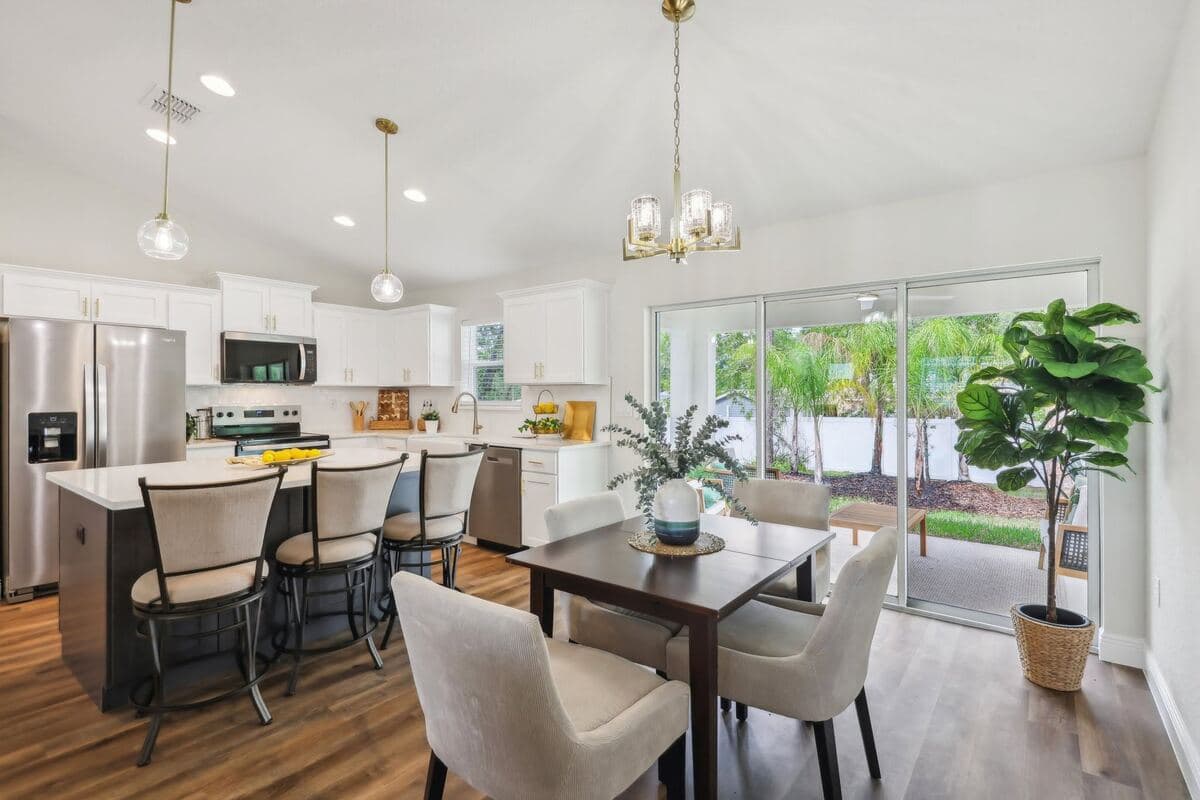
At the Global Wellness Summit's real estate symposium earlier this year, Ryan Hinricher found himself in a conversation that validated his approach to homebuilding. Three separate attendees described the concept of "invisible wellness"—health benefits built into a home that residents experience subconsciously. Hinricher, founder of Sunworth, a homebuilder in Florida's Nature Coast, had been designing his model home around that exact idea for the past year.
Invisible wellness refers to features that improve well-being without obvious labels: triple windows in the master bedroom that flood the room with natural light, wood ceilings that enhance acoustics and visual comfort, and lot orientations that preserve mature oak trees—because research shows that seeing trees from inside changes how the nervous system responds. "You don't notice them. You just feel better," Hinricher explained.
While much of the wellness real estate industry focuses on amenities like spas and yoga studios, Hinricher argues that true wellness starts with the home's structure. "You can't take a poorly built home with thin walls, a single window per room, and generic materials and make it healthy by adding a sauna in the backyard," he said. At the summit, a president-level executive from one of the largest national homebuilders told Hinricher that while her company is adding community amenities, they are not changing house structures due to the prohibitive cost at high volume—building 30,000 to 80,000 homes a year makes even one extra window a logistical and financial challenge.
This gap is precisely what Sunworth is filling. The company builds attainably priced homes with wellness-integrated design. A recent listing near Hinricher's model home generated over 2,000 Zillow views, more than 200 saves, 70+ shares, and three cash offers within two weeks. Buyers' feedback focused on the preserved tree canopy in the backyard, the tongue-and-groove wood ceiling, and the three windows in the master bedroom—features they couldn't always articulate but felt instinctively. "Some people can describe it, but it's like a feeling," Hinricher said. "A subconscious understanding of what we're doing, where the body feels it and the mind feels it, but people can't always pinpoint it."
Hinricher's model home, located on Florida's Nature Coast about an hour and a half north of Tampa, was intentionally sited in an area known for spring-fed rivers and outdoor lifestyle. The home is west-facing so the sunset hits a stand of oak trees visible from the main living area. During a stay with his daughter, she naturally gravitated to a window overlooking a neighbor's undeveloped oak grove to read—an unscripted response to the environment. "That is the point," Hinricher said. "When you build the right environment, the people inside it instinctively respond to it. No signage required."
For industry leaders, the implications are clear: as the wellness real estate market grows, the structural integrity and design of homes may become a competitive differentiator. Sunworth's approach suggests that invisible wellness could reshape buyer expectations, moving beyond amenities to the very fabric of living spaces. More information is available at sunworth.com.
