

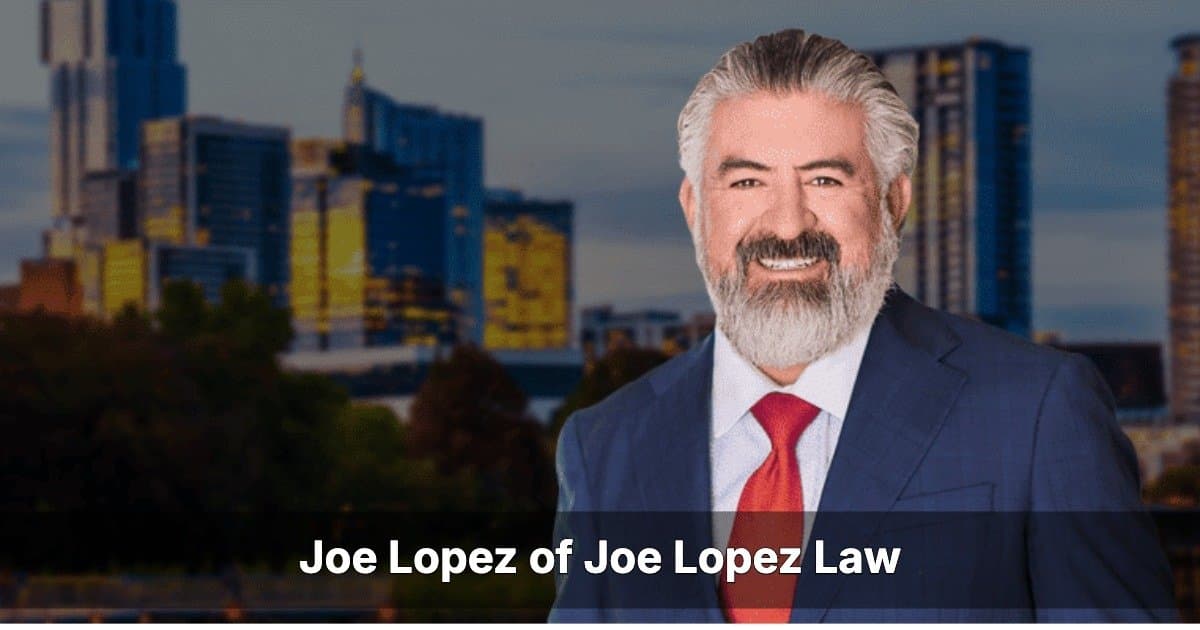
Joe Lopez Law, a personal injury firm based in Central Texas, has announced a new practice area focused exclusively on autonomous vehicle and robotaxi accidents, responding to the expansion of driverless vehicles on Austin roads and the rise of collisions involving Waymo vehicles. The firm aims to provide legal representation for victims facing the complex legal landscape of autonomous vehicle crashes, where traditional fault models based on human error no longer apply.
Under Texas Transportation Code Chapter 545, the automated driving system (ADS) is legally considered the “operator” of the vehicle, shifting accountability from human drivers to software developers, hardware manufacturers, and fleet operators. This legal framework requires a new approach to evidence preservation and liability determination. Joe Lopez, founder of Joe Lopez Law, emphasized that when a driverless car crashes, victims are immediately pitted against multi-billion-dollar technology companies, and critical electronic evidence—such as LiDAR data, 360-degree onboard camera footage, and internal vehicle decision logs—can be quickly overwritten. The firm is structured to intervene immediately to preserve this data.
The new practice area leverages the firm’s 25-plus years of trial experience and a $100 million recovery record. Joe Lopez Law’s team is fully bilingual in English and Spanish and handles cases on a contingency fee basis, ensuring clients have access to top-tier litigation resources without upfront costs. The firm’s expertise includes familiarity with the Texas Products Liability Act and the technical nuances of automated systems, which are essential for navigating claims against autonomous fleet operators.
For more information, consumer safety resources, or to speak with an attorney regarding a driverless vehicle collision, visit the firm’s resource page at Joe Lopez Law - Austin Waymo Accident Attorney.
The announcement comes as autonomous vehicle testing and deployment expand in Austin, raising new safety concerns and legal challenges for the community. Traditional auto accident cases focus on human error, but autonomous vehicle crashes require a different legal approach, making specialized representation crucial for victims. The implications for industry and consumers are significant: as driverless technology becomes more prevalent, the legal framework must adapt to ensure accountability and protect the rights of those injured in collisions involving automated systems.
