

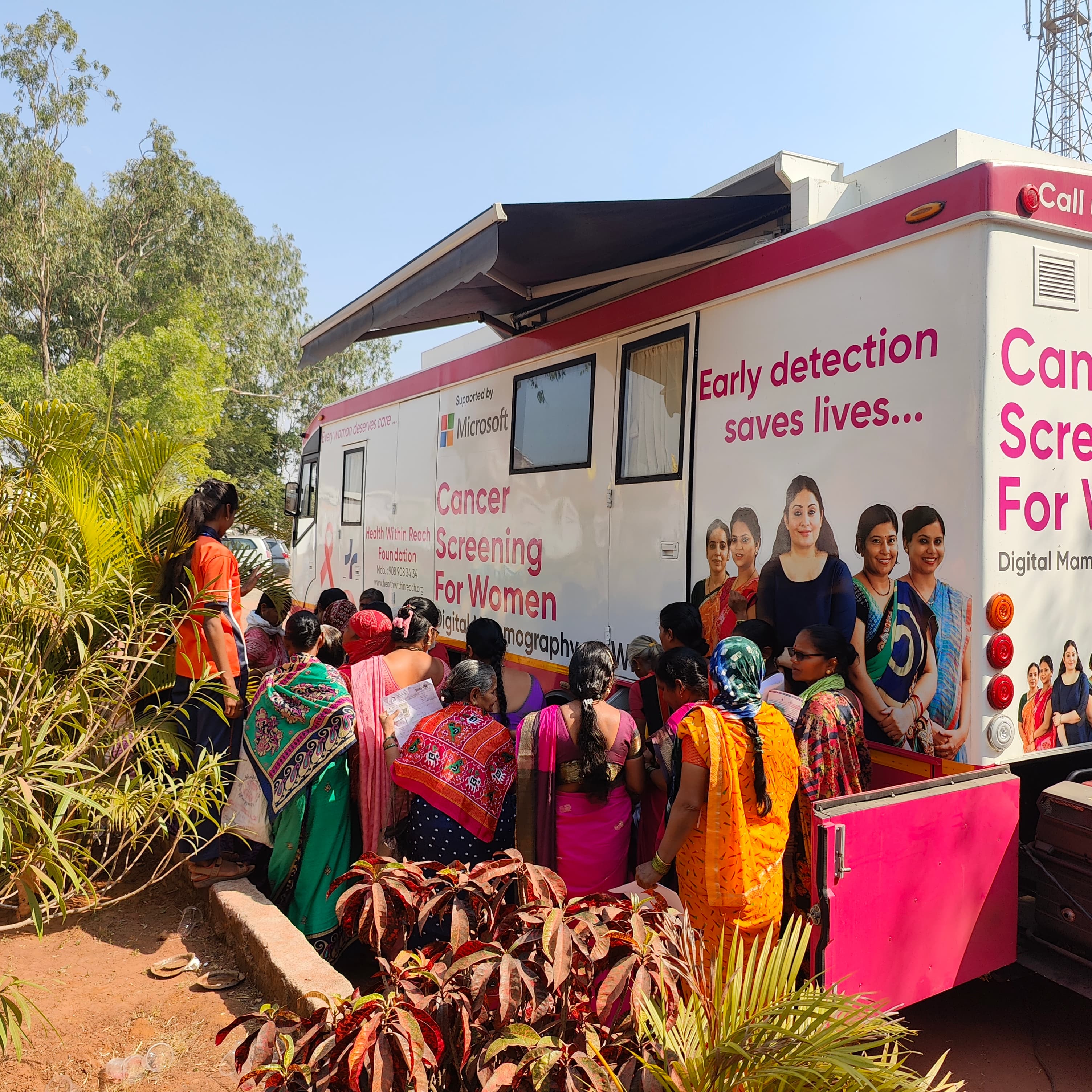
MedCognetics, Inc., a Dallas-based medical imaging AI company and member of the Amazon Web Services (AWS) Partner Network, announced a collaboration with Health Within Reach Foundation (HWRF) to deploy AI-enabled mobile mammography units in India. The initiative aims to bring critical breast cancer screening services directly to underserved populations, addressing significant gaps in early detection and healthcare access.
Breast cancer remains a leading cause of death among women in India, where late-stage diagnosis is common due to limited screening infrastructure and awareness. The mobile units, powered by MedCognetics' AI software platform integrated with AWS cloud services, will travel to rural and low-income urban communities, providing on-site mammography and real-time AI analysis. This approach reduces the need for multiple visits and enables faster referrals for follow-up care.
MedCognetics' AI algorithm is trained on a diverse global patient dataset, designed to mitigate data bias and ensure accurate results across different populations. The company emphasizes that unbiased AI services are crucial for creating predictable medical outcomes and saving lives. By leveraging AWS's scalable infrastructure, the solution can process imaging data efficiently even in remote locations with limited connectivity.
Health Within Reach Foundation, the nonprofit partner, will manage community outreach, patient education, and coordination with local healthcare providers. The foundation's mission aligns with the project's goal of bringing quality healthcare within reach for the underprivileged.
This deployment has significant implications for global health equity. For business and technology leaders, it demonstrates how AI and cloud computing can be applied to address critical societal challenges while creating scalable, cost-effective healthcare models. The initiative also highlights the potential for public-private partnerships to bridge gaps in healthcare infrastructure in emerging markets.
The mobile mammography units are expected to serve thousands of women annually, with plans to expand to other regions. By catching cancers earlier, the program could reduce mortality rates and lower treatment costs, easing the burden on India's overstretched healthcare system. This model could be replicated in other developing countries facing similar challenges.
For more information, visit MedCognetics at www.medcognetics.com.
