

Search Atlas, an AI-powered SEO and marketing platform serving more than 30,000 customers and 5,000 agencies worldwide, has completed a full migration of its own website, searchatlas.com, from WordPress to Next.js. The move, announced on August 18, 2026, reflects the company's response to the evolving demands of AI-driven search and the need for faster, more maintainable web infrastructure.
For eight years, Search Atlas operated its site on WordPress, a choice that initially offered rapid deployment and easy extensibility. However, as the platform scaled, the accumulation of plugins, page templates, and theme customizations created significant maintenance challenges. This pattern is common among growing companies that rely on systems designed for smaller footprints, where each addition adds complexity for developers and hampers performance.
The migration to Next.js is a strategic response to the changing landscape of web discovery. With the rise of AI search and agentic browsers, speed and performance have become paramount. WordPress's plugin-and-theme architecture, while flexible, introduces unnecessary code that browsers must load, increasing the risk of failures and slowing down page delivery. By rebuilding as a static HTML site on Next.js, Search Atlas has created a leaner, faster web presence that can scale efficiently.
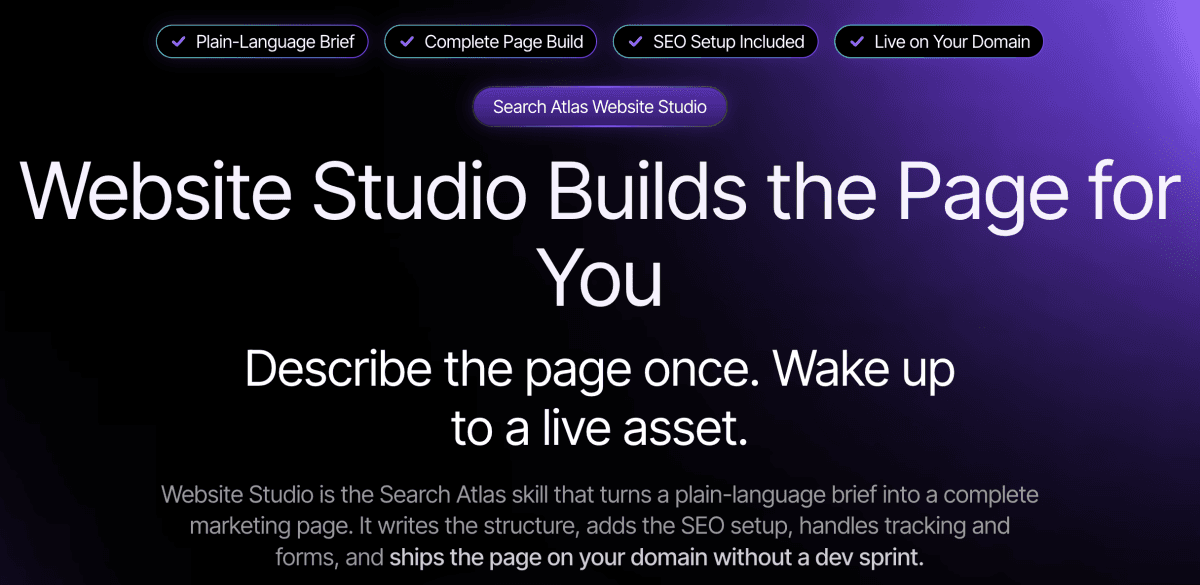
Beyond technical improvements, the shift represents a fundamental change in site management. The entire searchatlas.com website is now under the direct, agentic management of the Search Atlas platform and its Atlas Agent. Previously, tasks like technical fixes, on-page SEO changes, or creating new landing pages required a developer familiar with WordPress's intricacies. Now, these are handled directly through the platform, covering technical fixes, on-page SEO, conversion rate improvements, paid-media landing pages, and A/B and multivariate testing. This agentic approach eliminates the developer queue and reduces overhead, demonstrating the platform's capabilities in a real-world production environment.
Search Atlas positions this migration as a practical proof point, not just an internal upgrade. The company's marketing site now serves as a live example of what its platform can achieve. For prospective customers evaluating whether an AI-managed site can perform under real traffic, Search Atlas points to its own domain—built and maintained using the same methods available to customers—as evidence of viability.
Arman Advani, Partner at Search Atlas, commented on the transition: "We built our own site on WordPress for eight years because it was easy, and then we outgrew it the same way our customers do. Moving to Next.js and putting the whole site under Atlas Agent isn't just faster pages—it's us running our own website exactly the way we tell customers to run theirs."
The implications for the industry are significant. As businesses increasingly adopt AI-driven tools and face pressure to optimize for AI search, the move away from traditional CMS platforms may become more common. Search Atlas's migration highlights the potential benefits of static site generation and agentic management, which could influence how other companies approach their web strategies. By demonstrating a successful transition, Search Atlas provides a case study for enterprises seeking to reduce plugin overhead, improve site speed, and leverage AI for ongoing maintenance.
For leaders in business and technology, this development underscores the importance of evaluating web infrastructure in the context of emerging AI technologies. The choice of platform can have direct impacts on search visibility, user experience, and operational efficiency. As AI search continues to evolve, companies may need to consider similar architectural changes to remain competitive.
Search Atlas's move is a clear signal that the era of plugin-heavy websites may be waning, replaced by leaner, AI-managed solutions that prioritize speed and adaptability. The company's success in managing its own site agentically could inspire confidence in its platform and accelerate adoption among its 30,000 customers and 5,000 agencies.
