

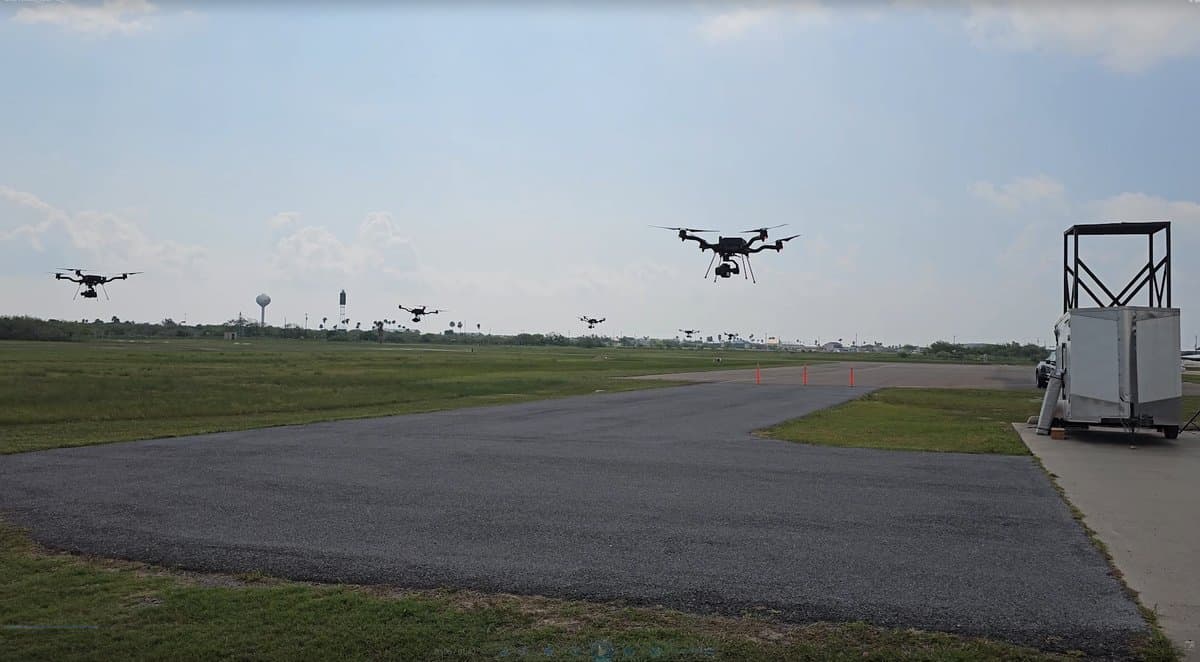
Tempest Droneworx™, a Houston-based Service-Disabled Veteran-Owned Small Business, has announced the release of Corvus MRDR™ (Modular Robotics Development & Reporting), a platform designed to streamline the testing and development of autonomous systems for developers. The announcement, made on August 18, 2026, addresses a significant bottleneck in the industry: the time and expense associated with field testing.
Autonomous developers often face substantial hurdles before they can test their algorithms, including aircraft, crews, ranges, travel, weather, and hardware. Corvus MRDR aims to change this by allowing engineers to test their algorithms and control methods at scale, progressively replacing simulated vehicles with real ones without disrupting existing workflows. Crucially, it preserves developers' intellectual property, a major concern in competitive and defense-related sectors.
One of the key features of Corvus MRDR is its integration of simulated and physical drones through CROS and RAVN, enabling incremental replacement of virtual aircraft with real ones in real-world coordinates. This hybrid approach allows for safe and efficient testing, reducing the reliance on costly and logistically challenging field trials. By enabling more robust testing, Corvus MRDR accelerates the development of autonomous systems, which could lead to faster deployment of technologies that improve public safety and quality of life.
The platform is platform-agnostic, meaning it can work with various hardware and software environments, making it versatile for commercial, academic, public safety, government, and defense customers. This flexibility is essential as the autonomous systems industry grows and diversifies.
According to the company, Corvus MRDR could significantly reduce development time and costs. For startups and established enterprises alike, this could mean quicker time-to-market for new autonomous capabilities, from delivery drones to advanced air mobility solutions. For public safety agencies, it could accelerate the adoption of drones for emergency response, search and rescue, and disaster assessment.
The development also has implications for the broader technology ecosystem. By making it easier to test and refine autonomous algorithms, Corvus MRDR could spur innovation in AI, robotics, and sensor integration. It might also lower the barrier to entry for smaller companies, fostering a more competitive and dynamic market.
However, the announcement does not include specific technical details about CROS and RAVN, leaving room for speculation about how they function. It also does not mention pricing or availability, which will be critical for potential users. As with any new platform, adoption will depend on ease of integration and demonstrated reliability.
Tempest Droneworx's background as a SDVOSB adds a layer of credibility, particularly for government and defense contracts, which often prioritize such designations. The company's focus on real-time operational insight from autonomous systems and sensor data positions it well in an industry that increasingly values data-driven decision-making.
For business leaders, the introduction of Corvus MRDR signals a shift towards more efficient development methodologies. It underscores the importance of simulation in reducing costs and risks, a trend that could extend beyond drones to other autonomous vehicles. As the technology matures, it may become a standard tool for developers, reshaping how autonomous systems are brought from concept to deployment.
