

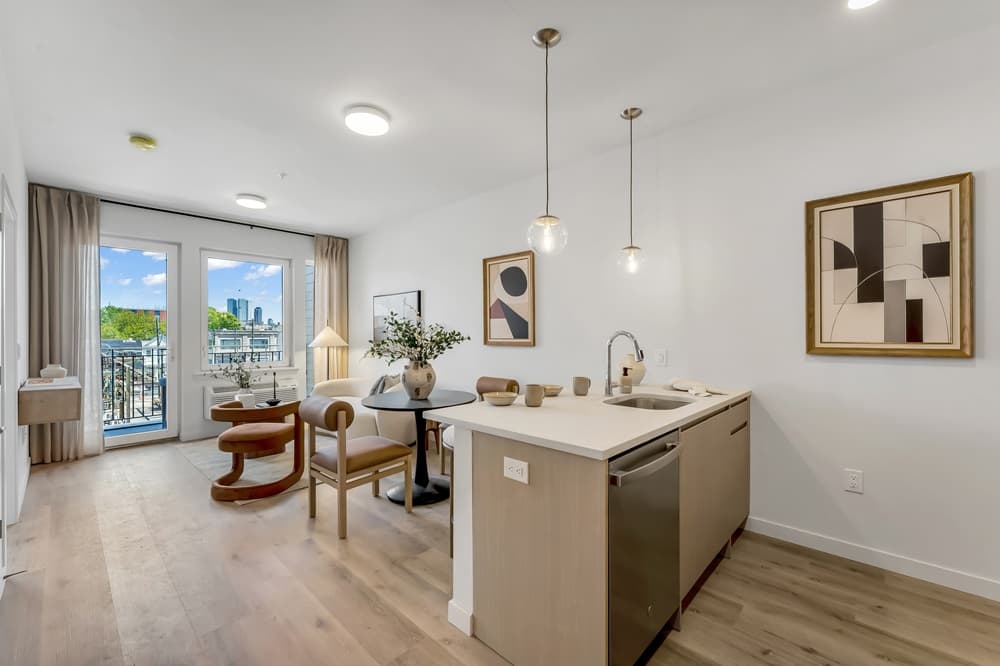
In the competitive world of multifamily development, a company's organizational structure can significantly influence the final product. Firms that manage the entire lifecycle—from design and construction to leasing and property management—operate differently from those that outsource each stage. This integrated model can lead to faster project timelines and superior quality, as demonstrated by TAY Investments, a vertically integrated developer based in Hackensack, New Jersey.
TAY Investments, founded by CEO Yuval Shram, is currently delivering LAZUL WEST, a 202-unit development at 301 West Side Avenue in Jersey City. The company's approach is rooted in the belief that owning the full lifecycle aligns incentives and drives better decision-making. "When you own the full life cycle, you understand everything," Shram explains. "You make every decision knowing you will own the property for the long term, so you build it to last." This long-term perspective ensures that choices are optimized for durability and resident experience rather than for a quick handoff to another party.
Vertical integration also accelerates project delivery by enabling real-time adjustments without the friction of multiple contracts. Since TAY acts as its own general contractor, design refinements and construction can proceed in parallel, coordinated within a single team. Shram describes this as managing a large, interconnected system with one hand on every piece. Changes to one element, such as a building entrance, affect utilities, access, and site planning, but keeping these relationships internal allows the project to advance smoothly. At LAZUL WEST, this coordination helped construction stay on schedule while plans were refined to a higher standard.
The advantages of integration extend well beyond construction. TAY's leasing and management teams are involved during the design phase, ensuring that the building is shaped around how residents will actually use it. "Our leasing agent will look at the plans and tell us where we can make them better," Shram says. "She might say a layout needs more walk-in closet space, because that is something residents value, so we build it in." Similarly, electric-vehicle charging was added early because the operating team recognized resident demand. These small touches, Shram notes, are what create the true value of a building.
As development expands into emerging neighborhoods like Jersey City's West Side, end-to-end quality control is becoming a key differentiator. A developer that builds and operates its own assets can maintain consistent standards from the first drawing through years of management. LAZUL WEST, now delivered and leasing, exemplifies this approach.
The implications for the industry are significant. In a market where speed and quality are often seen as trade-offs, vertical integration offers a way to achieve both. For investors and residents, this model may signal a more reliable and thoughtfully designed product. For other developers, it highlights the potential benefits of bringing more capabilities in-house, even if that requires significant investment. As sub-markets like Jersey City's West Side continue to grow, the ability to control every aspect of development could become a competitive advantage that shapes the future of multifamily housing.
