

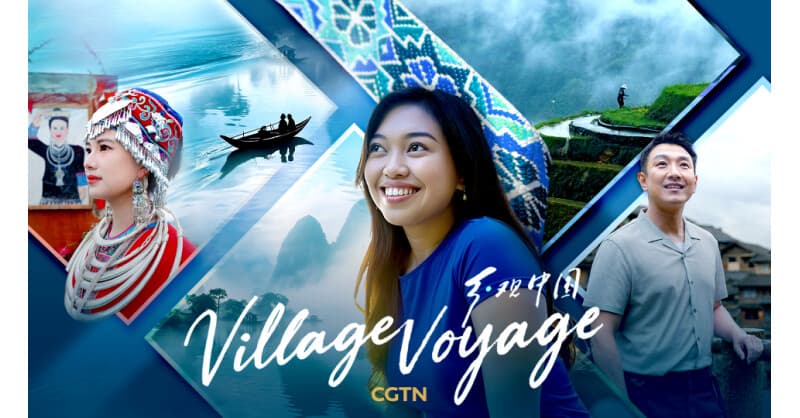
Known worldwide for its dramatic karst landscapes, Guilin has long been one of southern China’s most iconic travel destinations. As travelers increasingly seek deeper connections with local communities, rural Guilin offers a different way to experience the countryside, where visitors become part of the landscape rather than mere observers. The latest season of Village Voyage on CGTN captures this shift, following host Julian Waghann and Filipino traveler Eliza Arce as they explore Longsheng and Yangshuo, discovering how the region’s mountains, rivers, and people inspire a unique rural lifestyle.
At the heart of the journey are the Longji Rice Terraces, carved into the mountains of Guangxi over centuries by generations of local communities. For villager Liao Yanmei, who is leading restoration efforts, the terraces are inseparable from everyday life. “They mean everything to us,” she says. “They’re our life.” During the Shuyang Festival, Julian and Eliza participate in traditional seedling-throwing rituals and torchlit walks through the terraces at night, experiencing a celebration that now doubles as an immersive cultural experience for visitors.
The journey also takes them to Huangluo Yao Village, home to the Red Yao people and their centuries-old long hair tradition. Women use fermented rice water and locally grown herbs as a natural hair treatment, a practice rooted in sustainable living. “Long hair, in Red Yao culture, symbolizes longevity and prosperity,” says cultural ambassador Haili. The village is also known for its intricate costume craftsmanship, with master artisan Pan Jifeng noting that a single traditional outfit can take a year to complete, incorporating weaving, batik, natural dyeing, and embroidery inspired by the surrounding mountains and daily life.
In Yangshuo, the focus shifts to outdoor adventure as the region emerges as an international destination. Cycling, hiking, bamboo rafting, and cliffside adventures offer visitors a chance to engage with the landscape. Supported by convenient transportation and growing tourism facilities, Yangshuo blends nature, culture, and local life into a compelling travel experience.
The implications for business and technology leaders are significant. As rural tourism evolves, there is growing demand for sustainable infrastructure, digital platforms for cultural storytelling, and technology that enhances visitor experiences while preserving heritage. For the industry, Guilin’s model demonstrates how communities can leverage their natural and cultural assets to create economic opportunities without sacrificing tradition. The region’s success could inspire similar initiatives worldwide, where technology and tourism intersect to support rural development.
Ultimately, Village Voyage reveals that every village tells its own story—some written in the mountains, others in rivers, and some through songs and festivals. Guilin shows how rural communities continue to grow from the landscapes that shaped them, welcoming new visitors while keeping their own stories alive.
