

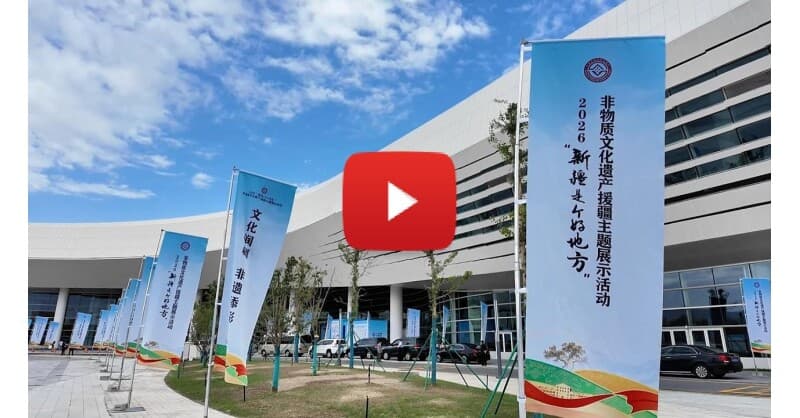
The 2026 'Xinjiang, A Land of Wonders' themed exhibition supporting Xinjiang through intangible cultural heritage opened on July 30 in Shihezi City, Xinjiang. Running through August 3, this year's event is the largest edition to date, featuring an innovative exhibition hall centered on 'integration and co-creation.' The exhibition vividly embodies the idea of beauty in diversity and harmony through mutual appreciation, according to the organizer.
At the main venue, the Shihezi Convention and Exhibition Center, six sections have been set up: 'Intangible Heritage: Music and Dance,' 'Intangible Heritage: A Feast of Local Flavors,' 'Intangible Heritage: Technology and Innovation,' 'Intangible Heritage: Learning and Transmission,' 'Intangible Heritage: Cultural and Creative Market,' and an interactive exhibition and performances themed 'Intangible Heritage in Poetry.' Together, they offer a diverse range of experiences, including Chaoshan Yingge dance, Xinjiang Muqam, heritage food tastings, XR digital experiences, and interactive educational activities.
The event also includes a sub-venue at the Bayi Sugar Factory Cultural and Creative District, where seven intangible cultural heritage items, including Nanjing Yunjin brocade and Hainan Li brocade, will be featured on a permanent basis. This move aims to shift intangible cultural heritage presentation beyond short-term exhibitions toward sustained transmission, ensuring these traditions are preserved for future generations.
Using intangible cultural heritage as a bridge, the event promotes interaction, exchange, and integration among all ethnic groups. By encouraging practitioners to learn from one another and collaborate, it injects new vitality into the safeguarding and transmission of intangible cultural heritage. The exhibition brings together more than 650 representative intangible cultural heritage items and is expected to receive 200,000 visits.
This year's exhibition highlights the intersection of tradition and technology, with XR digital experiences allowing visitors to engage with heritage in immersive ways. The inclusion of a dedicated section on 'Technology and Innovation' underscores the growing role of digital tools in preserving and promoting cultural heritage. For business and technology leaders, this event demonstrates how emerging technologies can be leveraged to enhance cultural experiences and drive tourism, potentially serving as a model for other regions looking to boost their cultural economies.
The permanent installation of heritage items at the Bayi Sugar Factory Cultural and Creative District also signals a shift toward sustainable cultural preservation, creating long-term opportunities for local communities and businesses. As Xinjiang continues to develop its cultural tourism sector, events like this are likely to play a crucial role in fostering economic growth while preserving the region's rich cultural diversity.
