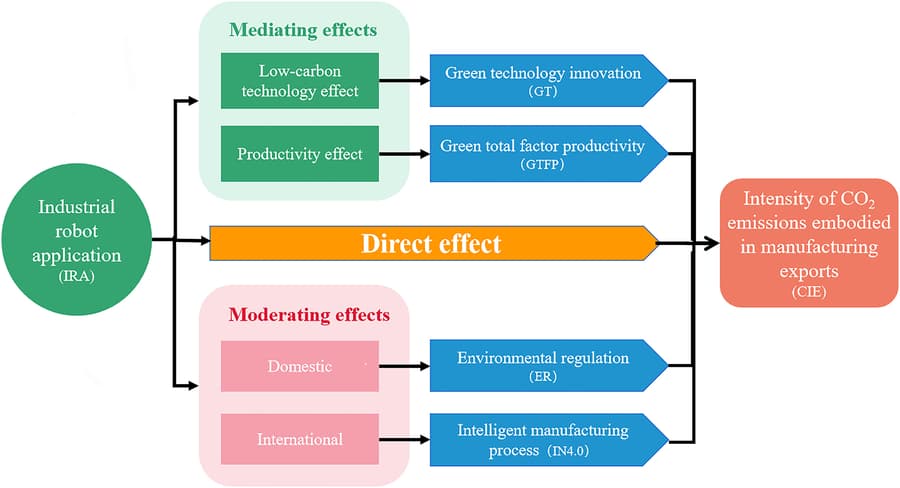
A study published in Data Science and Management on October 5, 2024, by researchers from Jiangsu University and Shaoxing University, demonstrates how industrial robots contribute to reducing carbon dioxide emissions in manufacturing exports. The research, accessible via DOI:10.1016/j.dsm.2024.09.003, analyzed data from 37 countries over 20 years, revealing a U-shaped relationship between automation and emissions reduction.
The findings indicate that while industrial robots can significantly decrease emissions initially, their long-term effectiveness depends on integration with smart manufacturing practices and environmental policies. Dr. Xiaoli Wu, the study's corresponding author, stresses the importance of combining automation with green technologies and strict regulations to achieve sustainability goals.
Medium-tech industries were found to benefit the most from emission reductions through robotic automation. The study suggests that for industrial robots to maximize their potential in reducing CO2 emissions, advancements in low-carbon technologies and productivity, alongside robust environmental regulations, are essential.
This research has profound implications for policymakers and industry leaders, advocating for policies that encourage the adoption of industrial robots and green technological innovation. It presents a compelling case for integrating smart manufacturing practices to enhance the sustainability of global trade.
As the world seeks solutions to combat climate change without hindering economic growth, the study underscores the importance of industrial automation in achieving more sustainable manufacturing processes. It calls for a holistic approach that marries technological advancements with environmental strategies to ensure the long-term effectiveness of emissions reduction efforts.
The study serves as a critical resource for industries and governments aiming to navigate the challenges of sustainable production. By leveraging industrial robots within a framework of environmental responsibility, the global trade sector can move towards a more eco-friendly future, addressing the urgent need to reduce carbon footprints worldwide.