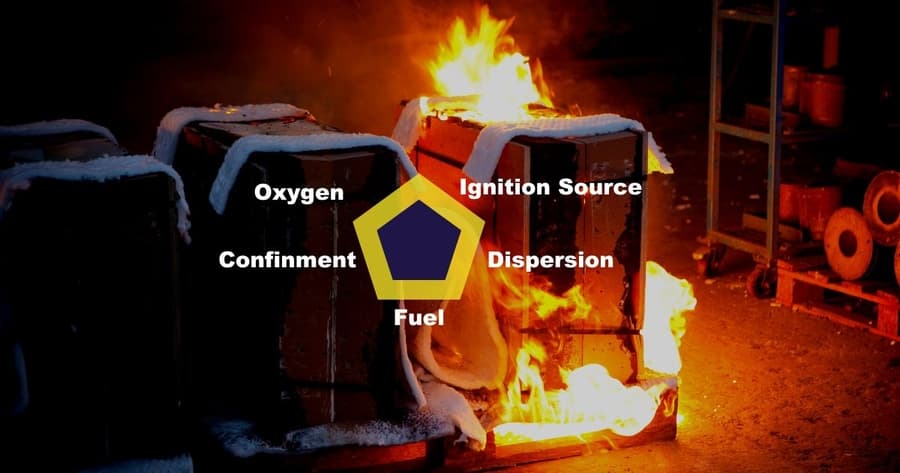
Industrial safety experts are drawing attention to the Dust Explosion Pentagon, a framework essential for preventing catastrophic incidents in workplaces. This model outlines the five critical elements necessary for a dust explosion: fuel (dust cloud), oxygen, an ignition source, dispersion of dust particles, and confinement. The simultaneous presence of these elements can lead to devastating explosions, emphasizing the need for stringent safety protocols in industries prone to such risks.
Combustible dust, ranging from wood to metal and plastic particles, acts as fuel when suspended in air. Oxygen, readily available in industrial settings, supports combustion, while ignition sources like sparks or flames trigger the explosion. Dust dispersion increases volatility, and confinement exacerbates the explosion's force. Eliminating any one element can significantly reduce, though not entirely eliminate, the risk, underscoring the importance of a holistic safety approach.
Industries such as wood processing, metal working, food production, and chemical manufacturing are particularly vulnerable. To combat these risks, experts recommend dust control measures, proper ventilation, equipment maintenance, and explosion-proof facility designs. Employee training on hazard recognition and the implementation of regular cleaning schedules are also vital.
Further preventative measures include the use of explosion-proof electrical equipment and spark detection systems. The link between the Dust Explosion Pentagon and confined space safety highlights the need for specialized rescue services in industries where both hazards coexist.
As industries innovate, the principles of the Dust Explosion Pentagon remain relevant, offering a foundation for enhancing safety protocols and safeguarding workers from the severe consequences of dust explosions. For more in-depth guidance, resources like The Dust Explosion Pentagon and Confined Spaces provide valuable insights into prevention and safety strategies.