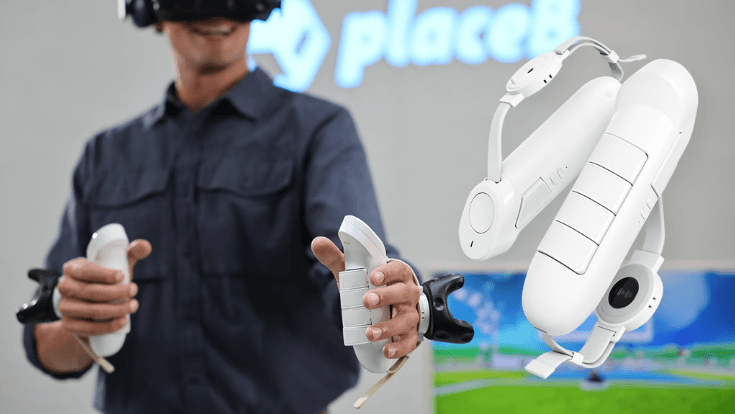
The virtual reality (VR) landscape is set to transform with the introduction of the Bstick VR haptic controller, launching on Kickstarter on August 6, 2024. This innovative device is designed to bridge the gap between virtual and physical worlds through its state-of-the-art haptic feedback technology, offering users the ability to feel tangible sensations that correspond to their actions within virtual environments.
Ergonomically designed for comfort during prolonged use, Bstick's lightweight and handheld form factor ensures that users can enjoy extended VR sessions without discomfort. Beyond its physical design, Bstick incorporates biometric sensors to monitor heart rate and other vital signs, providing users with insights into their physiological responses to virtual experiences. This feature not only enhances immersion but also heralds new applications in health and wellness within VR.
Accessibility and compatibility are at the forefront of Bstick's design philosophy. The controller is engineered to be user-friendly, catering to both seasoned VR enthusiasts and newcomers, and supports all major VR platforms, including Vive, Valve Index, and OpenXR systems. This broad compatibility ensures that Bstick can be seamlessly integrated into existing VR setups, making advanced haptic feedback more accessible to a wider audience.
For developers, Bstick presents an opportunity to push the boundaries of VR content creation. With support for popular game engines like Unity and Unreal Engine SDK, integrating Bstick's features into VR projects is streamlined, potentially catalyzing the development of more immersive and interactive applications across industries such as gaming, education, and professional training.
The launch of Bstick on Kickstarter marks a pivotal moment for the VR industry, highlighting the ongoing evolution towards more immersive and interactive virtual experiences. By combining advanced haptic feedback with biometric monitoring, Bstick not only enhances the realism of VR but also opens up new avenues for its application, signaling a future where virtual and physical realities are more closely intertwined than ever before.