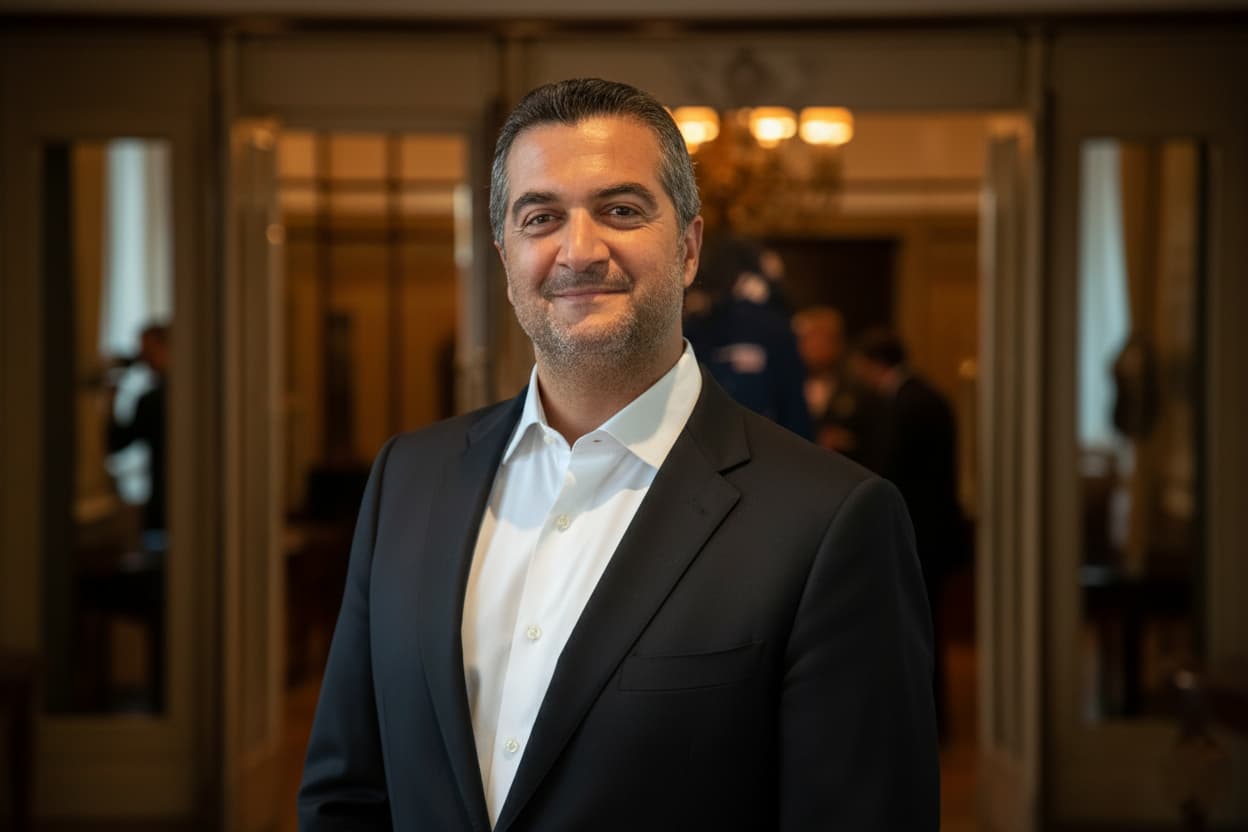
Industrial real estate has transformed from a niche sector to a highly competitive commercial property class over the past two decades. David Ebrahimzadeh, President and Founder of Corniche Capital, has navigated this evolution by adjusting his investment strategy to profit from the sector's rapid ascent. After beginning his career with multifamily properties in New York and New Jersey, Ebrahimzadeh shifted focus around 2010 to industrial assets, which he describes as "the ugly duckling of real estate" at the time. This move allowed him to acquire properties where the land value alone often exceeded the purchase price of the entire asset with a tenant in place.
The COVID-19 pandemic marked a significant turning point for industrial real estate, bringing mainstream attention as e-commerce surged and supply chain concerns grew. "COVID is when industrial real estate really got the spotlight," Ebrahimzadeh notes. This increased competition compressed cap rates and drove up pricing, making traditional value-add acquisitions more challenging for individual investors. In response, Ebrahimzadeh pivoted to development, seeking land in secondary markets where regulatory environments support faster project timelines.
Ebrahimzadeh now prioritizes markets like New Mexico, Texas, and South Carolina over traditional East Coast locations due to their efficient permitting processes and pro-business approaches. "In New Mexico, as long as you're not looking for any variances, you can get permits inside of 30 days," he explains. The state's economic development authority actively attracts tenants through incentive packages for companies establishing manufacturing or distribution facilities. This strategic market selection aligns with the current resurgence in U.S. manufacturing driven by federal policies and supply chain realignment.
"With the current priorities of this administration and the heavy push for re-industrialization, I'm beginning to see that the demand for manufacturing seems to be far surpassing the distribution demand," Ebrahimzadeh observes. In his active markets, manufacturing tenants now drive most leasing activity, reflecting broader economic shifts toward domestic production. This trend creates significant opportunities for investors positioned in regions with business-friendly policies and available labor forces.
Beyond traditional industrial development, Ebrahimzadeh has encountered unexpected opportunities in the data center sector through properties with access to large-scale power capacity. In Belen, New Mexico, he controls a site capable of securing several hundred megawatts of dedicated power, scalable to 600 megawatts. Rather than developing data centers directly, he prefers selling power-ready land to operators seeking rapid grid access, citing uncertainty about long-term demand in that market. This approach reflects his broader investment philosophy of seeking value while minimizing development friction.
Looking forward, Ebrahimzadeh is expanding his New Mexico operations to include large-scale mixed-use developments, planning master-planned communities of 1,000 acres or more in Los Lunas near Albuquerque. These projects aim to address housing needs while creating integrated communities that serve workers attracted by new manufacturing and distribution jobs. His journey demonstrates the importance of recognizing overlooked sectors early, adapting to new market realities, and maintaining geographic flexibility. As American manufacturing continues its resurgence, investors who combine strategic site selection with an understanding of regulatory dynamics remain best positioned to capture long-term gains in industrial real estate.