

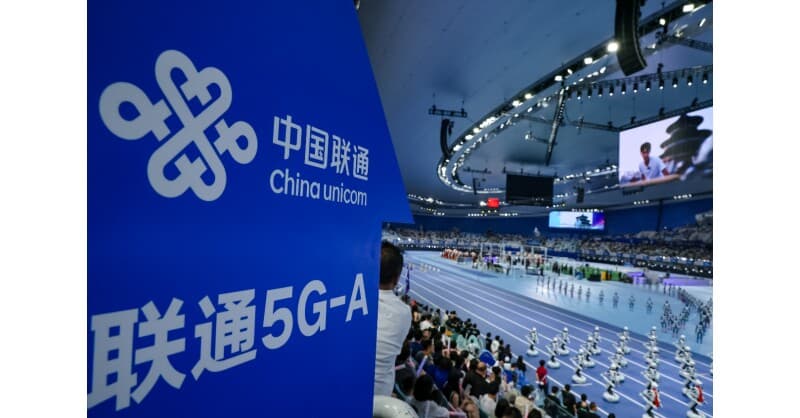
The 2nd World Humanoid Robot Games, which opened at Beijing's National Speed Skating Oval, also known as the "Ice Ribbon," is showcasing the latest advancements in humanoid robotics and embodied AI. Central to this year's event is a robust 5G-A (5G-Advanced) network built by China Unicom Beijing and Huawei, providing the high-capacity, low-latency connectivity required for thousands of robots to compete in complex tasks. This deployment is part of the 5G Capital initiative, which aims to establish a region-wide network foundation for cultural tourism, embodied AI, and Mobile AI applications.
The scale of this year's Games has expanded significantly, featuring 1,301 competitions across 51 events, with 2,056 humanoid robots from 666 teams worldwide. The event count nearly doubled from the inaugural Games, introducing high-intensity head-to-head events like table tennis and kickboxing, as well as scenario-based competitions in industrial production, hotels, homes, and logistics. The increased task complexity and autonomous operation demand networks that can support real-time telemetry, precise control signaling, and multi-robot coordination, necessitating high uplink capacity, millisecond-level responsiveness, and high reliability.
To meet these stringent requirements, China Unicom Beijing and Huawei deployed a dedicated 100 MHz network, complemented by a 300 MHz LampSite ultra-wideband indoor network. This setup ensures real-time robot telemetry and precise signaling exchange. A dedicated 5QI 7 slice with carrier isolation keeps end-to-end latency within 30 milliseconds, enabling millisecond-level decision-making and response for fine-motion control and obstacle avoidance. The network also integrates BeiDou RTK positioning, delivering decimeter- to sub-decimeter-level accuracy, which is critical for autonomous navigation and precision racing. On-site tests recorded peak uplink speeds of 1 Gbps and average latency below 30 milliseconds, proving the network's capability.
Beyond robot connectivity, the network prioritizes spectator experience. With high-density crowds, network resources are dynamically adjusted based on event phases—admission, waiting, competition, and departure. Core services like instant messaging, ticket inquiries, QR-code admission, and mobile payments are prioritized, while data-intensive services such as photo uploads, short-video sharing, and live streaming are also supported, ensuring seamless connectivity during peak traffic.
China Unicom also introduced China's first embodied AI robot management platform designed for event scenarios. Each robot is assigned a unique network ID, allowing staff to monitor its location, competition status, and operational metrics in real time, creating a closed-loop management system. This platform enhances operational efficiency and provides a model for future large-scale deployments.
The implications of this deployment extend far beyond the Games. As humanoid robots move from controlled arenas into everyday environments, reliable, high-bandwidth, low-latency connectivity becomes essential. The 5G-A GigaUplink network demonstrated here lays the groundwork for widespread adoption of embodied AI in sectors like manufacturing, logistics, healthcare, and entertainment. For business leaders, this signals a future where autonomous robots can operate seamlessly in real-world settings, requiring robust network infrastructure to support them.
Yang Lifan, Deputy General Manager of China Unicom Beijing, emphasized that this deployment is not just a test but a stepping stone for large-scale embodied AI deployments. "We will continue to build on the experience gained through the 5G Capital initiative and turn technological innovation into tangible and replicable network capabilities for the Mobile AI era," he said.
David Li, President of Huawei's Wireless TDD Product Line, highlighted the validation of the 5G-A 100 MHz GigaUplink network based on 3.5 GHz 2CC + 2.1 GHz SUL for embodied AI scenarios. He noted that Huawei will continue to strengthen uplink capabilities and advance spectrum coordination to enable real-time interaction and precise control across a wide range of applications.
As the Mobile AI era unfolds, the success of this network at the Humanoid Robot Games provides a blueprint for the connectivity infrastructure needed to support intelligent, autonomous systems. For industries eyeing robotic automation, this development underscores the importance of investing in advanced network capabilities to unlock the full potential of embodied AI.
