

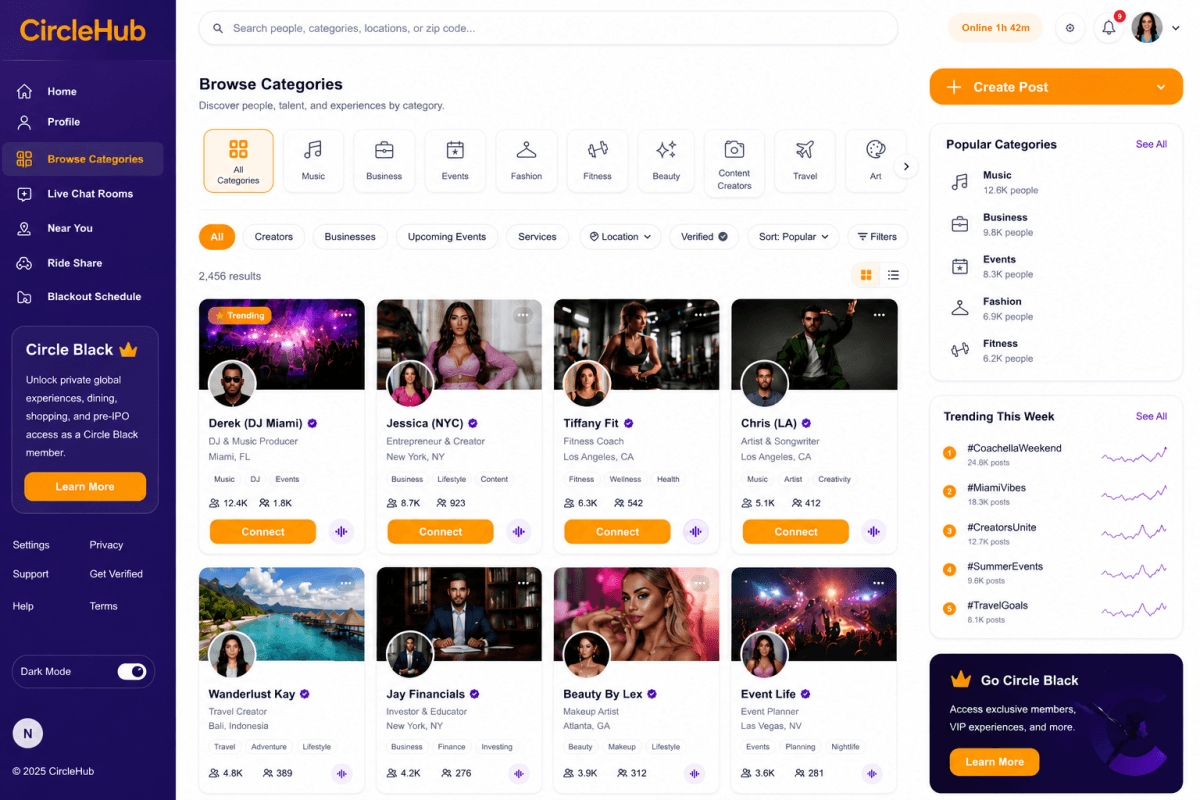
CircleHub officially launched its CircleHub Discovery Engine during the BET Awards weekend, unveiling a platform designed specifically for high school and college students to connect with creators and brands. The launch targets younger audiences seeking alternatives to established social platforms like Instagram, emphasizing discovery and authentic interaction over passive content consumption.
The platform positions itself as a genuine Instagram alternative, built around the needs of students and young creators rather than the general public. Where Instagram has grown into a broad, advertising-heavy environment, CircleHub narrows its focus to the demographic that shapes digital culture: high school and college students.
At the core of the platform is the CircleHub Discovery Engine, which helps users discover creators, communities, and brand opportunities aligned with their interests. Instead of relying on passive scrolling, the engine surfaces active connections, putting students in front of creators and brands that match their passions.
Key features include CircleHub Discovery Ambassador Sites, which give brands a dedicated space to find and connect with up-and-coming talent. For any brand looking for creators—particularly those targeting student demographics—the ambassador site structure provides a more targeted approach than broad influencer marketplaces. On the creator side, the platform offers creator sites that serve as structured home bases for building presence. Combined with live chat rooms and voice replies, these tools encourage real interaction rather than performative engagement.
CircleHub has set a public growth target of 1 million users, calling on students, creators, and early adopters to help reach that milestone. The community-driven approach frames sign-ups as participation in building something together, rather than simply joining an existing product. The timing aligns with growing skepticism among younger users toward legacy platforms, citing concerns over algorithmic manipulation, content saturation, and privacy.
The platform serves three distinct groups simultaneously: students seeking community and content, creators building an audience, and brands looking for authentic talent without navigating oversaturated channels. The live chat rooms and voice reply features add real-time interaction often absent from content-discovery platforms, making CircleHub a practical space for ongoing conversation rather than one-way broadcasting.
For business and technology leaders, CircleHub's focused strategy highlights a shift in social media toward niche, purpose-driven platforms. The emphasis on discovery and authentic connection could reshape how brands engage with younger demographics, offering a more targeted alternative to broad influencer campaigns. The platform's success in reaching 1 million users will test whether a curated, student-focused model can compete with established giants.
