

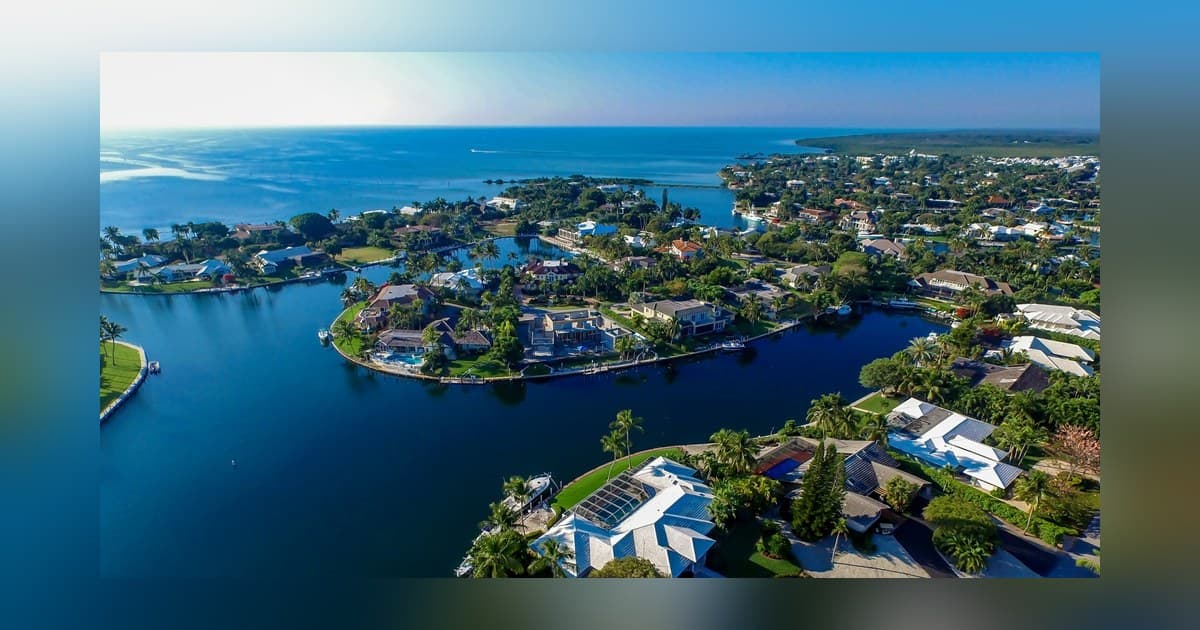
The Florida Keys real estate market presents a unique challenge for buyers: nearly every residential property lies within a FEMA-mapped flood zone. This near-universal designation means that simply seeing a flood zone on a listing tells buyers little. What matters is the specific zone and its implications for exposure and cost. Sandy Tuttle, founder of Island Welcome Real Estate on Summerland Key, emphasizes that buyers often misunderstand these designations, leading them to overlook suitable properties.
Keys properties typically fall into three classifications. The X zone covers the highest elevations and has the lowest flood risk, resulting in more affordable insurance premiums. The AE zone applies to properties set back from direct water exposure, often shielded by other structures; many canal homes and interior properties fall here. The VE zone, the highest exposure, is for front-row properties with direct open water frontage—those with unobstructed views that are also first to face storm impacts.
A persistent misconception is that some properties cannot be insured. Tuttle clarifies that almost every property in the Keys has an insurance product available; the difference lies in cost and coverage structure. Buyers who eliminate homes based on the assumption of uninsurability are narrowing their search on a false premise.
Financing plays a pivotal role in how flood zones affect purchasing decisions. Financed purchases require a complete insurance package—homeowners, wind, and flood—leaving no room for discretion. Cash buyers, however, can weigh premiums against coverage value and may choose to self-insure certain components, but this decision must be deliberate and made before closing.
Flood zone interacts with other property-specific factors that drive insurance pricing, including replacement cost, elevation above base flood, roof type, and impact-rated windows and doors. Two homes in the same zone on the same canal can have vastly different quotes. Tuttle advises pulling current owner premiums as a starting point and obtaining fresh quotes based on intended use, making insurance costs part of the offer analysis rather than a surprise after closing.
The implications for buyers and the industry are significant. As newer, code-compliant construction replaces older housing stock, the premium gap between compliant and non-compliant properties is widening, influencing resale prices across the Lower Keys.
For business and technology leaders, this trend underscores the growing importance of data-driven decisions in real estate. Advanced analytics and AI tools are increasingly used to assess property-specific risks and insurance costs, allowing buyers to make more informed choices. The Florida Keys market exemplifies how granular data—beyond basic flood zone designations—can drive value and mitigate risk. As climate risks evolve, such insights will become essential for property investors and homeowners alike.
