

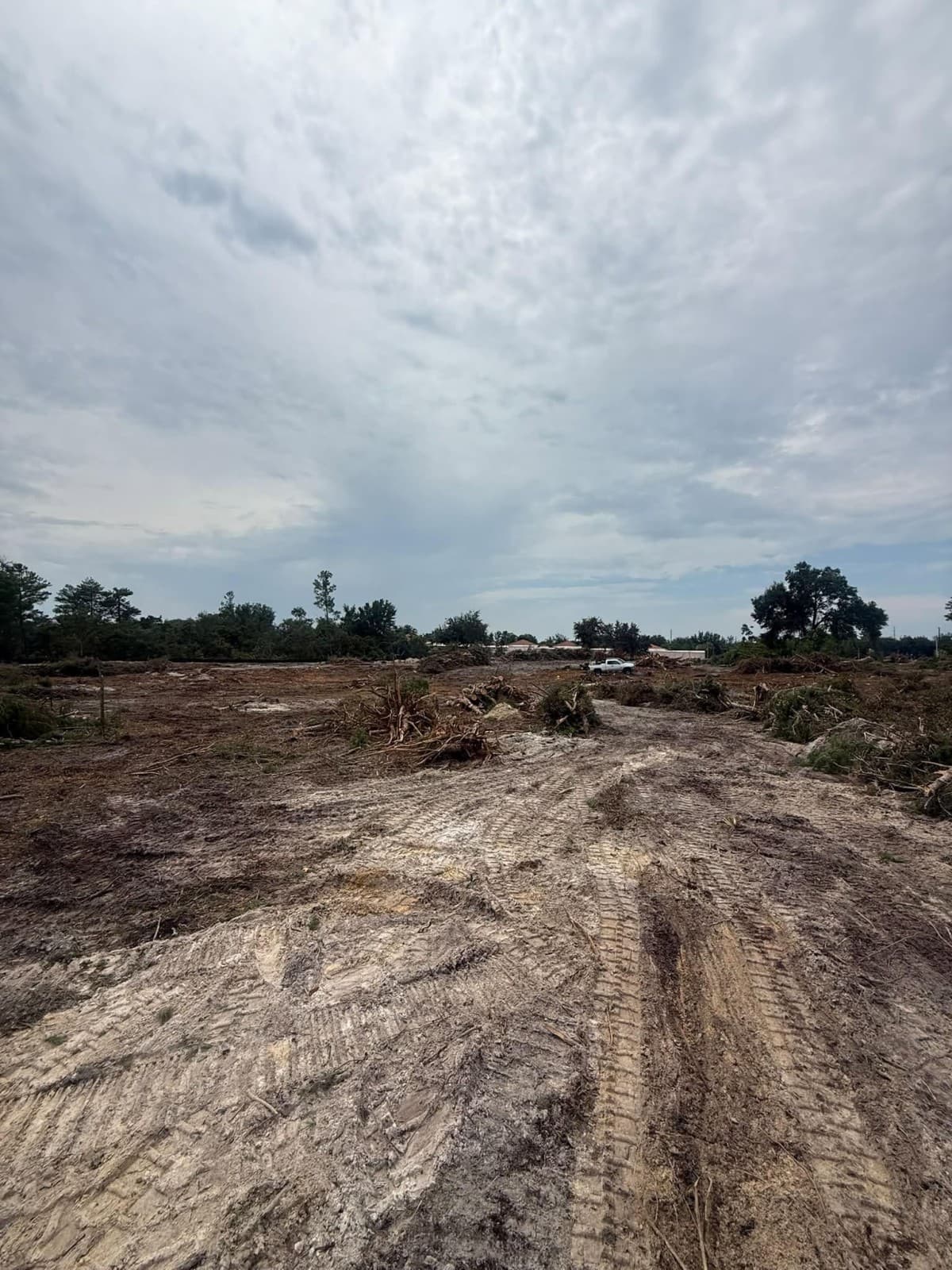
As residential development and rural land sales continue to rise across the United States, property owners are increasingly searching for "land clearing near me." A new educational resource from VB Tree Removal aims to help these property owners understand when professional land clearing is necessary, what drives the costs, and what methods are available.
The guide identifies seven concrete indicators that signal the need for professional land clearing. These range from vacant lots that have overgrown over several seasons, to construction projects where a building permit has been issued, to trees encroaching on structures or utility lines. Each scenario presents unique challenges that standard lawn equipment cannot handle, from root systems and invasive species to liability concerns and municipal requirements.
One of the key methods highlighted is forestry mulching, which has become a widely adopted alternative to burn piles and debris hauling. A forestry mulching attachment grinds stumps, brush, and small trees into ground cover in a single pass, reducing labor hours and the volume of material requiring disposal. This method also controls erosion on slopes where bare soil would otherwise be exposed, making it an attractive option for many projects.
The guide also outlines the primary cost factors property owners encounter when requesting a land clearing estimate. These include vegetation density and species mix, parcel size, disposal method, access, and permitting requirements. For instance, hardwood stands require more machine time than scrub brush, and per-acre rates typically decrease as acreage increases. On-site mulching with forestry mulching equipment generally costs less than hauling debris to an off-site facility.
Residential land clearing projects on smaller lots—typically under one acre—tend to involve more manual labor relative to machine time, which affects the overall price breakdown differently than commercial land clearing on larger tracts. The guide also addresses common questions, such as whether forestry mulching is suitable for all soil types (it may not be appropriate for extremely rocky ground), and whether site prep always includes stump removal (it is typically a separate line item).
The implications of this resource are significant for property owners, developers, and the industry. By understanding the signs that professional land clearing is needed, property owners can avoid costly mistakes and safety hazards. For example, attempting to clear an overgrown lot with residential tools can extend project timelines and increase the risk of injury. Additionally, knowing the cost factors can help property owners budget more accurately and choose the most efficient methods, such as forestry mulching.
For the industry, this guide reflects a growing demand for professional land clearing services as subdivision activity and infill construction continue. It also highlights the importance of using licensed and insured contractors, especially when work involves proximity to power infrastructure or building foundations. As the resource notes, unlicensed crews are not equipped to manage the liability exposure that comes with such projects.
VB Tree Removal provides land clearing services for residential and commercial property owners, offering brush clearing, tree clearing, forestry mulching, site prep, and debris removal. The company handles projects ranging from single-lot cleanup to large-scale acreage clearing and construction site clearing. More information is available at Volusia Bobcat & Tree Service.
