

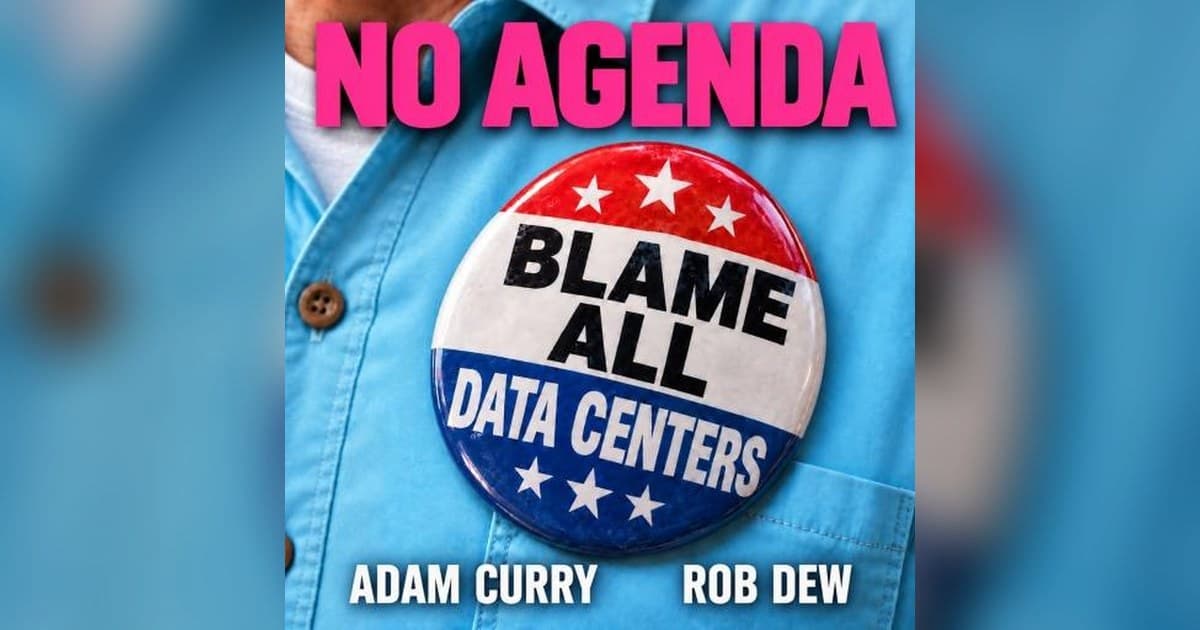
In a media landscape saturated with rapid-fire developments, the long-running listener-supported podcast No Agenda offers a skeptical deconstruction of the news cycle. Episode 1909, titled "Immune Amnesia," published October 4, 2026, features host Adam Curry broadcasting from the Texas Hill Country with returning guest co-host Rob Dew. The episode surveys a dense array of stories, from a mysterious FlyDubai Boeing 737 MAX 8 incident to the accelerating displacement of commercial software by AI agents, a pneumonic plague death in Russia's Irkutsk region, a measles resurgence in Pennsylvania, violent school protests across France, and Cornell fraternity allegations drawing commentary from political figures.
For business and technology leaders, the episode's core themes underscore the growing intersection of AI, media, and societal upheaval. Curry and Dew dissect the "death of software" thesis, highlighting a reverse-engineered Call of Duty: Modern Warfare 2 running Halo assets as an example of AI's capabilities. They also discuss Meta's new Muse AI agent, Mark Zuckerberg's Charm device, and Airbnb CEO Brian Chesky's comments on Silicon Valley's disconnection from the public. These segments illustrate how AI is not only transforming product development but also reshaping how companies engage with users and society.
A striking moment comes from Curry's reaction to a Gen Z TikToker warning about AI-driven reverse engineering of banks, satellites, and encrypted systems. Curry intones, "I'm afraid we've opened Pandora's box, but humanity hasn't even recognized it yet because we've been too excited holding it. And now it's become the mark of the beast, the birthing pains of the rapture, the second coming of the nuclear bomb. But instead of fission, it's just text." This vivid metaphor captures the existential unease that accompanies AI's rapid advancement, a sentiment that leaders must navigate as they integrate AI into their strategies.
Countering the doom, Dew shares his own experiment building a donation-spreadsheet tool that replaced Microsoft Excel in his workflow, demonstrating AI's practical benefits. Curry details his new podcastindexrobot.com MCP server, built on the open Podcast Index he co-owns with Dave Jones. The tool showcases how an agent can strip six minutes of dynamically inserted ads from Ed Zitron's Better Offline podcast, pointing to AI's potential to disrupt advertising models and content consumption. The segment pivots to a 1999 David Bowie interview with Jeremy Paxman on the BBC, where Bowie predicted the internet as "an alien life form," drawing a parallel to today's AI evolution.
The episode also revisits historical incidents such as US Air Flight 427's 1994 rudder hardover and a 1994 Today Show clip of Katie Couric asking, "What is internet, anyway?" alongside Gina Raimondo warning of "rioting in the streets" from AI job displacement. These archival references contextualize current anxieties about technological change and its societal impact. For instance, the measles resurgence and the concept of "immune amnesia" (detailed in the episode's notes at "Immune Amnesia,") serve as a metaphor for how misinformation and systemic vulnerabilities can erode public health and trust.
For industry leaders, the implications are clear: AI is not just a tool but a force that demands ethical consideration and adaptive strategies. The displacement of software, the rise of AI agents, and the potential for job displacement are immediate concerns. Moreover, the episode's focus on media framing highlights the need for critical engagement with news sources. As AI continues to permeate every sector, understanding its dual nature—both as a driver of innovation and a source of disruption—will be essential for navigating the coming years. No Agenda Episode 1909 serves as a timely reminder that the conversation around AI is as much about society as it is about technology.
