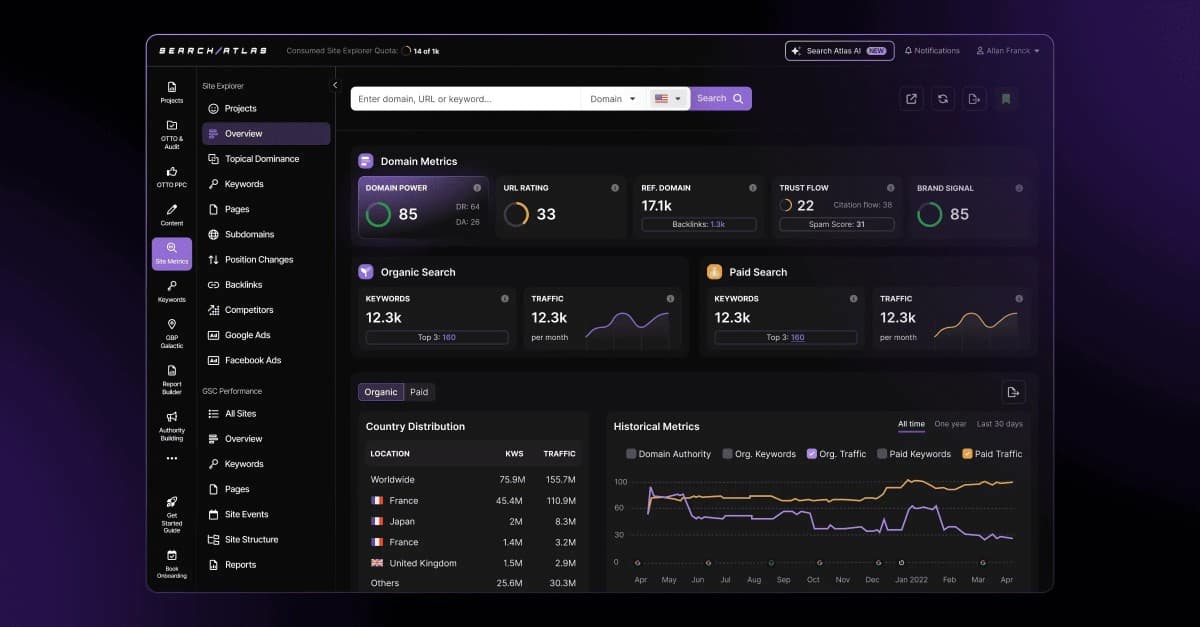
Search Atlas has announced meaningful updates to its OTTO SEO automation tool, targeting three persistent challenges marketers face with AI SEO tooling. The new features include OTTO DeepFreeze, WordPress Plugin 2.5.0, and native CMS Connectors, all designed to improve reliability and transparency in AI-powered marketing automation.
The newly introduced DeepFreeze feature allows SEO optimizations to remain active on a website even after a subscription has been canceled. Once enabled, all changes that OTTO has applied to a site, including technical SEO elements such as schema markup and meta tags, continue to function without interruption. This feature is available at no cost and does not depend on an active subscription to remain operational. For agencies, this ensures that results delivered to clients remain intact regardless of subscription status changes, while in-house marketing teams benefit from preserving prior SEO work during budget adjustments.
Search Atlas has released version 2.5.0 of its WordPress plugin, focusing on streamlining setup and reducing integration errors. The update brings single sign-on authentication, enabling users to connect their Search Atlas account with a single click. The plugin automatically detects and links the correct OTTO project for the associated domain, eliminating manual API key entry. A connection status indicator provides confirmation that the site and Search Atlas are properly synced before deployment. When WordPress debug mode is active, the plugin generates anonymous error logs that can be shared directly with support teams to accelerate troubleshooting.
The platform has introduced a new CMS Connectors dashboard that provides authenticated, API-level integration between Search Atlas and more than 10 content management platforms. Supported platforms include Shopify, HubSpot, Wix, Contentful, GoHighLevel, Drupal, Joomla, Magento, and Salesforce, among others. Each connector establishes a secure link between the respective platform and Search Atlas, improving content detection accuracy on CMS environments that limit access to public crawlers. Once connected, the Search Atlas AI content tool can publish articles, create drafts, and populate SEO metadata fields directly within the connected CMS, removing manual copying or reformatting requirements. All connectors are managed through the CMS Connectors dashboard found within Search Atlas account settings at https://searchatlas.com and can be configured based on team needs.
These updates represent a significant shift in how AI-powered SEO tools handle client relationships and technical implementation. The DeepFreeze feature addresses a fundamental concern about subscription dependency, ensuring that SEO work remains valuable beyond billing cycles. The WordPress plugin improvements reduce technical barriers for the platform's substantial WordPress user base, while the expanded CMS integration capabilities enable more consistent SEO execution across diverse technology stacks. For marketing leaders, these developments suggest a maturation of AI marketing tools toward greater reliability and client-centric design, potentially reducing the perceived risk of adopting automated SEO solutions at scale.