

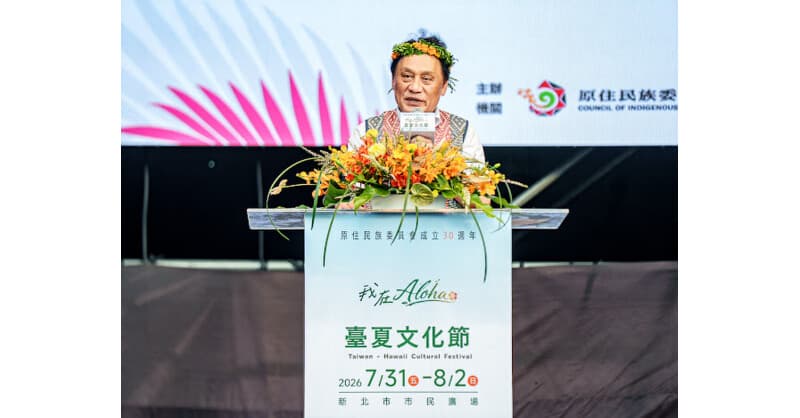
The Council of Indigenous Peoples (CIP) of Taiwan, in collaboration with the State of Hawaii Office in Taipei, hosted the three-day "Formosa-Hawaii Cultural Festival" from July 31 to August 2 at the New Taipei City Citizen Plaza. The event, which marked the CIP's 30th anniversary, brought together performances and cultural exchanges aimed at highlighting the shared Austronesian heritage between Taiwan and the broader Pacific region.
The festival featured a rich program of international music and dance, drawing performers from Hawaii, Palau, and Tuvalu, alongside Taiwan's own Golden Melody Award-winning artists. Among the highlights were the powerful, masculine hula performances by the acclaimed Hawaiian dance group Ke Kai O Kahiki, and evening concerts that showcased contemporary interpretations of indigenous music. The event also included an Austronesian-themed marketplace where visitors could sample Hawaiian Kona coffee and indigenous delicacies, try hula dancing and lei making, and participate in daily lucky draws.
At the opening ceremony, CIP Minister Ljaucu·Zingrur emphasized the emotional power of cultural experiences and the importance of sound policy in transforming that emotion into lasting institutions. He paid tribute to individuals who have made outstanding contributions to indigenous affairs, including advocates for international indigenous rights, linguists dedicated to saving endangered languages, artists who have brought acclaim to Taiwan, and community leaders who demonstrated bravery in disaster response. "This cultural celebration is powerful proof that Indigenous culture is not only flourishing on Taiwan's own soil, but is also embracing the world with the utmost confidence and openness as it steps onto the international stage," he said.
The festival's significance extends beyond entertainment. It represents a strategic effort by Taiwan to strengthen cultural diplomacy and assert its place as a hub of Austronesian culture. By partnering with Hawaii, a state with deep Polynesian roots, Taiwan is fostering connections that could have lasting economic and political implications. For businesses and leaders, such cultural exchanges can open doors to new markets and collaborations in the Pacific region, particularly in tourism, arts, and technology.
The event also highlights the growing global interest in indigenous cultures, which are increasingly recognized as repositories of traditional knowledge and sustainable practices. For the technology sector, this presents opportunities to develop digital platforms that preserve and promote cultural heritage, from language learning apps to virtual reality experiences of traditional performances.
As the CIP celebrates three decades of work, the festival serves as a reminder of the progress made in indigenous rights and cultural preservation. It also underscores the importance of international cooperation in addressing shared challenges, such as language loss and climate change, which disproportionately affect indigenous communities.
The Formosa-Hawaii Cultural Festival not only provided a platform for cultural exchange but also set a precedent for future collaborations. By bringing together artists, community leaders, and audiences from across the Pacific, it demonstrated the unifying power of culture and the potential for deeper ties between Taiwan and its Pacific neighbors. For attendees, it was an opportunity to experience firsthand the vibrant traditions that connect the region, and for observers, it was a glimpse into the evolving role of indigenous culture in shaping contemporary society.
